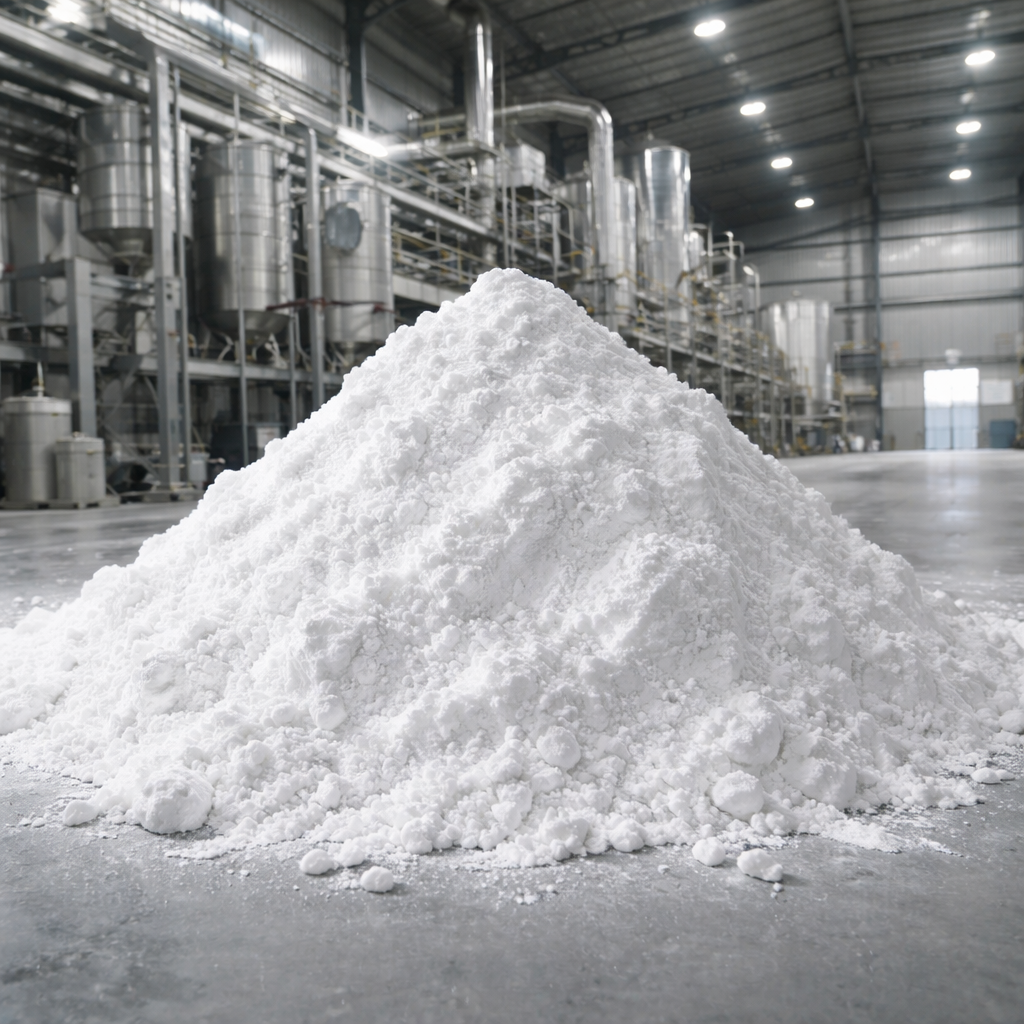
(June 8, 2026) China's silica industry is at a critical juncture of structural upgrading and market expansion. Recently, driven by multiple factors such as green and low-carbon transformation, localization of high-end technologies, the implementation of major projects, and new energy demand, the industry has shown a structural differentiation pattern of "stabilizing general product prices and rising volume and prices of high-end specialty products." At the same time, domestic fumed silica is rapidly breaking overseas monopolies, continuously enhancing industrial competitiveness.
Green manufacturing is deeply implemented, with resource recycling becoming the core competitiveness
With the continued tightening of domestic environmental protection policies and the deepening of the "dual carbon" strategy, the pace of green transformation in the white carbon black industry has accelerated significantly. The traditional sedimentation method, which produced high water consumption and high waste emissions, is gradually being replaced. Technologies such as by-product salt recovery, wastewater recycling, and waste residue resource utilization are widely applied, significantly reducing production costs and environmental pressure. Among them, the industrialization of rice husk-based silica is particularly impressive. Relying on policies to resource agricultural and forestry waste, this process not only achieves low-carbon production but also effectively avoids EU carbon tariffs, becoming a new growth point for foreign trade exports and driving revolutionary changes in the raw material structure of the industry.
Major projects are being launched intensively, with capacity expansion focused on high-end sectors
Recently, domestic expansion of silica production capacity has focused on high value-added sectors. On June 5, Zhongke Fu Hydrogen (Shandong) New Energy Co., Ltd. announced its 200,000 tons/year carbon dioxide acidification silica project, with a total investment of 1.02 billion yuan, built in three phases. After the first phase is completed, it will have an annual output of 60,000 tons, all focused on special white carbon black for new energy support. Meanwhile, leading companies such as Chencheng Co. and Linke Technology continue to advance technological upgrades, with new capacity all directed toward highly dispersed, modified specialized products. The industry's pattern of excess low-end capacity and insufficient high-end supply is gradually improving.
Domestic gas-phase silica has broken its monopoly, and import substitution has accelerated across the board
The high-end fumed silica sector, long monopolized by overseas companies, has recently made substantial breakthroughs. Many domestic chemical companies have successfully achieved localization of process technologies, with core indicators such as product purity and specific surface area reaching internationally advanced levels. Leveraging cost and location advantages, domestic fumed silica has rapidly entered automotive electronics, high-end silicone, pharmaceutical excipients, and other fields, breaking import dependence and forcing a reshaping of global industry chain prices and supply-demand structures. According to industry data, in early June, domestic fumed silica orders increased by over 25% month-on-month, and foreign trade contract volumes rose simultaneously.
New energy demand is strongly supporting the bottom, and market structural differentiation is intensifying
The downstream demand structure continues to optimize, completely breaking free from single-source dependence on the traditional tire industry. Since 2026, demand for highly dispersed and modified silica in new energy vehicles, photovoltaic adhesives, and lithium battery separators has surged, driving both volume and price increases for specialty products. According to Business Press data, on June 4, the domestic benchmark price for rubber-grade precipitated silica remained stable at 6,000 yuan per ton, with very little price fluctuation; Meanwhile, the quotation for new energy specialized modified silica generally rose by 10%-15%, with order scheduling cycles exceeding one month.
Industry Outlook: High-end, green, and internationalization will be the core directions
Industry experts say that 2026 will be a critical year for the transformation of China's white carbon black industry. In the short term, new energy and foreign trade exports will continue to drive demand for high-end products, and competition in the general market may become even fiercer; In the long term, green circular technology, high-end vapor phase processes, and expansion of application scenarios will become core competitive strengths for enterprises. With continuous breakthroughs in domestic technology and deepening global low-carbon consensus, China's white carbon black industry is leaping from a "capacity powerhouse" to a "technology powerhouse," occupying a more central position in the global industrial chain.
http://www.siliconeoil.net