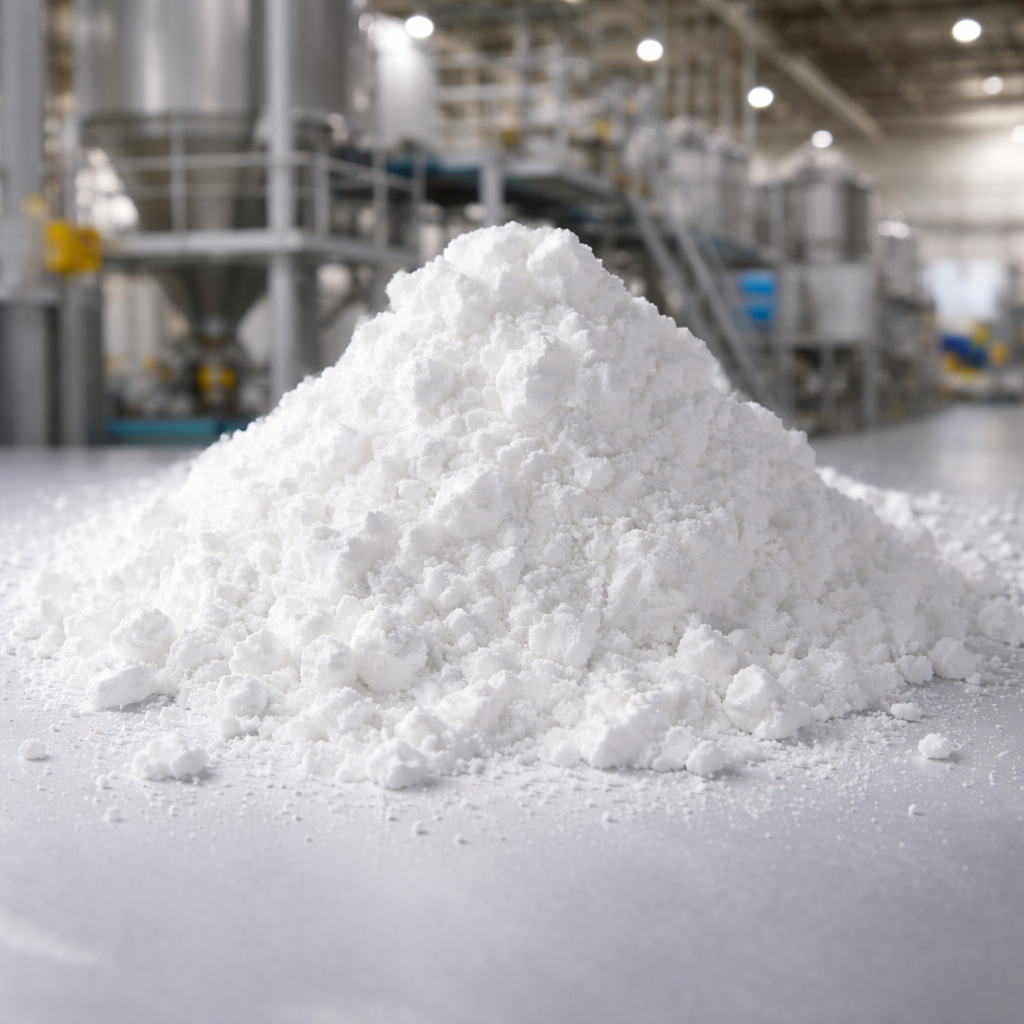
(June 4, 2026) The domestic silica industry market structure has undergone significant changes. Traditional general-purpose products are operating steadily, while functionally modified silica adapted for new energy, photovoltaics, and lithium battery sectors, as well as highly dispersed specialty silica, are experiencing simultaneous increases in volume and price. Driven by the rapid expansion of the new energy industry, the downstream application scenarios for silica continue to broaden, completely breaking free from the traditional tire industry's single dependence, and becoming a growth dark horse in the new chemical materials sector.
According to chemical market monitoring data, the current market differentiation is very pronounced. Market prices for ordinary rubber-grade and daily chemical general white carbon black remained stable, with competition focused on stable orders and volume growth, with minimal price fluctuations. In stark contrast, supply of highly dispersed silica for new energy, hydrophobic silica for lithium battery separators, and gas-phase silica for photovoltaic adhesives is tight, with market prices continuing to rise, with monthly increases exceeding 8%. Some leading companies have already booked orders through the third quarter, making spot availability difficult and locking up production immediately upon order receipt the norm.
The explosive demand across the entire new energy industry chain is the core driver behind the price hikes and shortages of specialty white carbon black. In the new energy vehicle sector, the adoption rate of lightweight, low-rolling resistance new energy tires continues to rise. High-dispersion silica as the core reinforcing material can effectively reduce tire energy consumption and improve wear resistance. The demand for vehicle supporting materials continues to grow, significantly driving the growth of high-end silica consumption. Meanwhile, the energy storage and photovoltaic industries continue to thrive. Photovoltaic sealing silicone and photovoltaic backsheet coatings require extremely high reinforcement, anti-aging, and weather resistance for silica, with rigid demand continuously expanding, making it the largest incremental market for fumed-phase silica.
The lithium battery segment has become a new growth pole. With upgrades in power battery safety and stability, white carbon black is widely used in lithium battery separator coatings, electrolyte additives, and cathode material coatings due to its excellent insulation, wear resistance, and anti-caking properties. Industry data shows that by 2026, domestic lithium battery consumption of white carbon will increase by over 20% year-on-year, making it the fastest-growing track among all downstream applications, which in turn forces industry companies to accelerate product iteration and upgrades.
Changes in market demand are forcing industry enterprises to transform. In the past, domestic white carbon black companies mostly concentrated in the low-end general market, long trapped in price competition. Now, driven by the rigid demand for new energy, many companies have stopped expanding low-end capacity, focusing their R&D efforts on tackling special modified silica technology, and positioning themselves in high-end tracks in new energy, electronics, and energy storage. Many listed companies have ramped up their investments in functional silica technology transformation projects, focusing on the R&D and production of high value-added products. Product gross margins have increased by more than 30% compared to traditional products, achieving a qualitative leap in profitability.
The import and export markets have also shown structural changes: low-end white carbon black exports remain stable, while dependence on high-end new energy-specific white carbon black imports has rapidly declined. Domestic specialty silica has gradually aligned its performance with international first-tier standards, successfully entering the supply chains of leading domestic new energy companies, achieving significant import substitution, and some high-end products have achieved reverse export to overseas markets.
Industry analysts believe that the growth logic of the white carbon black industry has completely changed, no longer relying on traditional rubber industry dividends, but instead being dominated by emerging sectors such as new energy, photovoltaics, and energy storage. As the new energy industry continues to expand, specialty functional white carbon black will remain in a long-term supply shortage. The industry's structural bull market will persist, and differentiation, high-end design, and functionality will become the core competitiveness for future survival and development of white carbon black companies.