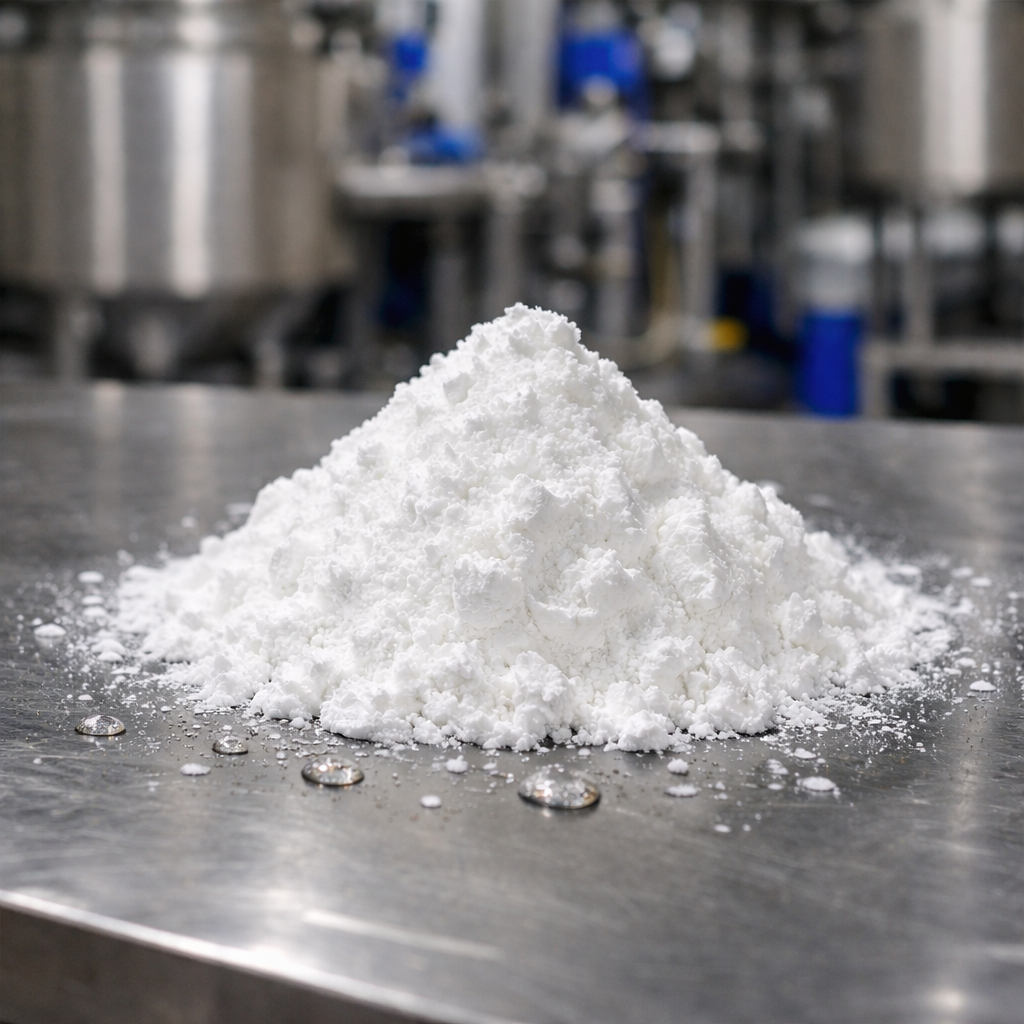
(May 30, 2026) Driven by the restructuring of the global chemical supply chain and the upgrading of domestic product quality, China's silica foreign trade exports have performed impressively this year, achieving simultaneous growth in volume and price against the trend. Relying on comprehensive production capacity, mature manufacturing technology, and high cost-performance advantages, domestic silica continues to gain influence in the global market. It not only stabilizes traditional overseas markets such as Southeast Asia and the Middle East but also successfully expands into high-end markets in Europe and Latin America, becoming a leading export category in China's chemical new materials sector.
According to the latest foreign trade data, in the first quarter of 2026, the total domestic export volume of white carbon will achieve significant year-on-year growth, with the most notable growth in exports of highly dispersed rubber-grade and coating-specific grades. Entering the second quarter, overseas downstream enterprises concentrated their restocking demand. In May, mainstream domestic white carbon black producers had strong overseas orders, stable shipment rhythms, and overall export prices continued to rise. Unlike previous years, this year the export structure of white carbon has been significantly optimized, with the proportion of low-end ordinary products continuously declining, while the proportion of high value-added modified and high-end fumed silica exports has increased significantly, and export profitability quality has significantly improved.
Southeast Asia remains the largest export destination for domestically produced white charcoa. In recent years, the tire and rubber products industries in Southeast Asia have expanded rapidly, but local silica production capacity is insufficient, making it highly dependent on Chinese imports. With the continuous implementation of local green tire capacity, demand for highly dispersed environmentally friendly silica has surged. Many leading domestic enterprises in Shandong and Jiangsu have long supplied leading rubber companies in Southeast Asia, ensuring stable and sustainable export orders. Meanwhile, emerging markets such as the Middle East and Africa are steadily developing basic building materials and coatings industries, with rigid demand for silica continuously being released, making it an incremental export market for domestic products.
The breakthrough in the European market has become the biggest highlight of this year's white carbon black foreign trade. Previously, the European high-end silica market was long monopolized by domestic European and American companies, who had strict requirements for imported product quality, environmental standards, and production standards. As domestic silica companies complete green process upgrades, product carbon emissions, purity, and stability all meet EU standards. Coupled with anti-dumping policy benefits, domestic high-end silica has successfully entered the European markets for new energy tires, high-end coatings, and photovoltaic supporting products, achieving bulk exports and completely breaking the long-standing monopoly of overseas brands.
Comparing import data, China's white carbon black import volume has been shrinking year by year. Except for a very few ultra-high-end specialty products, the vast majority of categories have achieved fully independent supply, basically completing import substitution. Meanwhile, domestic white carbon black has begun reverse export substitution with its superior quality, gradually replacing overseas imported products in the global market. The industry's import and export trade surplus continues to expand, and the industry's international competitiveness is steadily rising.
Industry foreign trade insiders analyze that the continued positive export performance of domestic white carbon black is mainly due to two major advantages. First, the advantage of industrial clusters: the domestic upstream and downstream industrial chain for silica is well-equipped, with clear advantages in raw materials, logistics, and production costs, making the cost-performance ratio highly competitive in the global market; Second, the advantage of quality upgrades: the company continues to increase R&D investment, improve product processes, and align high-end product performance with international first-tier standards to meet the needs of overseas high-end terminals. In addition, the continuously optimized domestic foreign trade policies and the improved cross-border logistics system have also provided strong guarantees for product exports.
Currently, the global chemical industry is reshaping its competitive landscape, with chemical production capacity and insufficient operating rates in many overseas regions, providing Chinese white carbon companies with an excellent window to capture the global market. Currently, leading domestic companies have all established overseas markets, establishing stable overseas distribution channels and after-sales systems, with brand influence continuously increasing. At the same time, companies customize adapted products based on the market demands of different overseas regions, further enhancing their adaptability and market share in overseas markets.
Regarding future market trends, industry institutions predict that in the short term, global downstream rubber, new energy, and coatings sectors will maintain stable demand, and overseas restocking demand will continue to support the silica export market. In the medium to long term, as recognition of domestic high-end products continues to rise, overseas market penetration will further increase, and export volumes are expected to maintain steady growth. Driven by exports, the domestic silica industry will further open up growth space, break free from domestic homogenized low-price competition, and rely on the global market to achieve high-quality development.