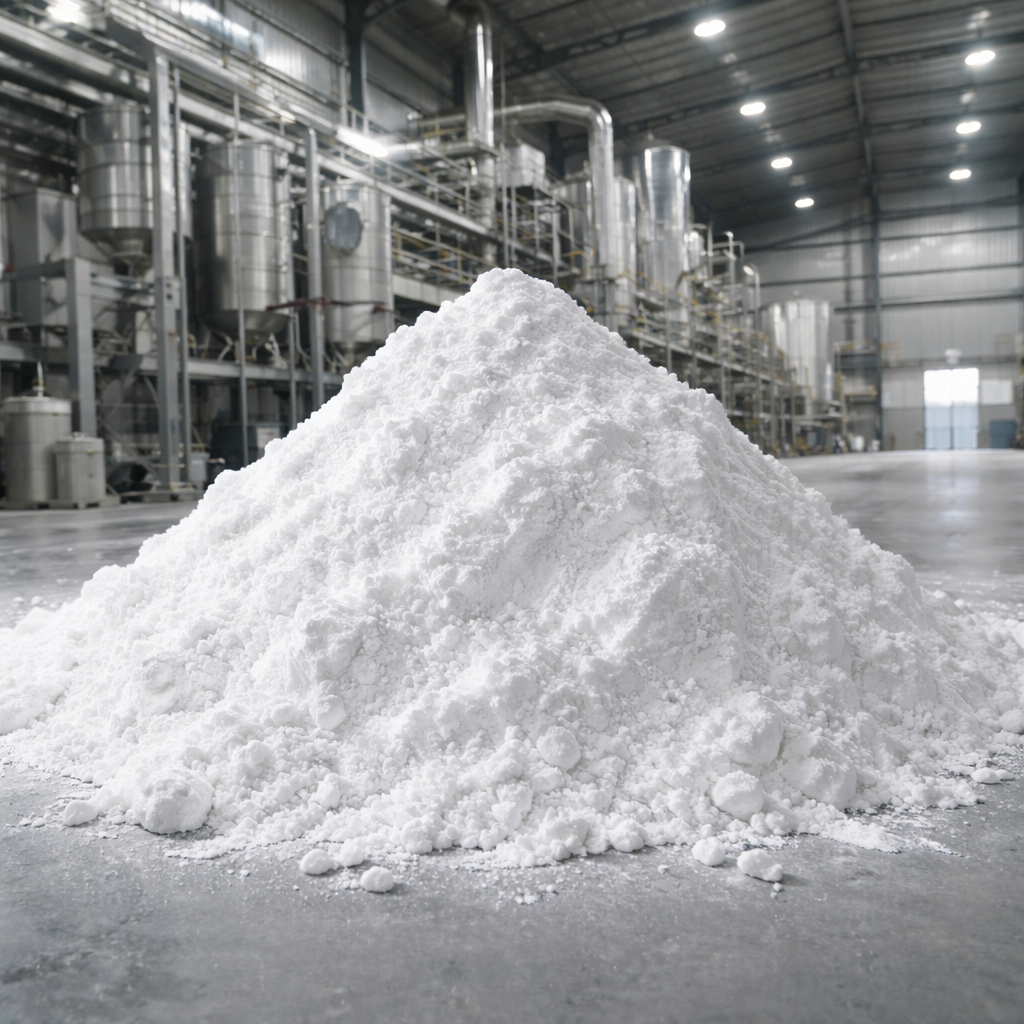
(May 29, 2026) With the deep development of the new materials industry, silica has become a key foundational material bridging traditional manufacturing and emerging high-end industries with its excellent properties such as reinforcement, thickening, aging resistance, and adsorption. By the end of Q2 2026, changes in market demand structure, end-use application standards, and downstream industry patterns are forcing the silica industry to break free from traditional price competition and usher in a comprehensive value restructuring, profoundly shifting the industry's development logic.
In the civil and industrial manufacturing sectors, the quality upgrades of downstream industries have directly raised the quality requirements for silica. As the largest application market for white carbon dioxide, the tire industry has now become the mainstream direction for greening and energy saving. Domestic and international environmental regulations are continuously tightening, forcing tire companies to use high-dispersion, low-energy-consumption reinforcement materials. Traditional ordinary precipitation methods for silica can no longer meet the production standards for high-end tires. Against this backdrop, orders for specialized white silica suitable for green tires continue to increase, and the product's premium capability is steadily improving. In areas such as ordinary rubber products and low-end footwear, the market still focuses on low prices and volume, with high inventory of general-purpose silica and fierce market competition, industry profits being continuously diluted, and increasingly polarized.
The rise of diversified emerging industries continues to expand the application map of white carbon black, opening up entirely new growth tracks for the industry. Currently, the new energy industry maintains rapid development, with the supply chains for lithium batteries, photovoltaic modules, and energy storage equipment continuously extending. Nano-modified silica and vapor-phase silica, with their advantages in insulation, resistance to high and low temperatures, and stable reinforcement, have become core auxiliary materials for lithium battery separators, photovoltaic sealants, and electronic seals, with market demand rising year after year. Meanwhile, fields such as high-end coatings, food daily chemicals, pharmaceutical excipients, and agricultural additives have set refined requirements for the purity, particle size, and surface activity of silica. Demand for various customized specialty products continues to be released, becoming new profit growth points for the company.
The transformation of market demand is driving accelerated innovation and integration on the production side. Due to multiple policies controlling environmental protection, energy consumption, and production safety, domestic small and medium-sized workshop-style production lines are gradually being phased out, accelerating the clearing of outdated capacity. Industry resources are continuously concentrating on leading companies, with large enterprises actively deploying intelligent and green production lines and adopting continuous manufacturing processes. This not only improves product stability and yield rates but also significantly reduces energy consumption and emissions. The previous model of blindly expanding capacity has been abandoned, and companies have begun to focus on refined product R&D, creating exclusive product systems tailored to different downstream scenarios.
Independent R&D capabilities have now become the core trump card for companies to capture the market. In the past, domestic high-end specialty silica relied on imports for a long time. After years of technological breakthroughs, local companies have continuously made breakthroughs in core technologies such as vapor phase preparation, surface modification, and precise control of nanoparticle size. The performance of domestic high-end products is gradually aligning with international first-tier standards, and the process of import substitution continues to accelerate. Many companies are no longer limited to simply selling raw materials, but are now providing supporting material solutions and technical support based on downstream customers' production conditions and product performance needs, comprehensively upgrading their service models.
Based on current market environment forecasts, the structural trend in the white carbon black industry will continue for a long time in the second half of 2026. General goods remain mired in low-price competition, with limited profit margins; The demand for various high-end, specialized, and modified white carbon black markets remains strong, with great development potential. Industry insiders say that the silica industry has moved beyond the stage of extensive development, and the core of future competition lies in product quality, technological R&D, and comprehensive service capabilities. Companies that closely follow downstream industry upgrading trends and continue to deepen their niche markets will firmly grasp development opportunities, and the entire industry will steadily move toward a new stage of high-quality development amid dual supply and demand transformation.
http://www.siliconeoil.net