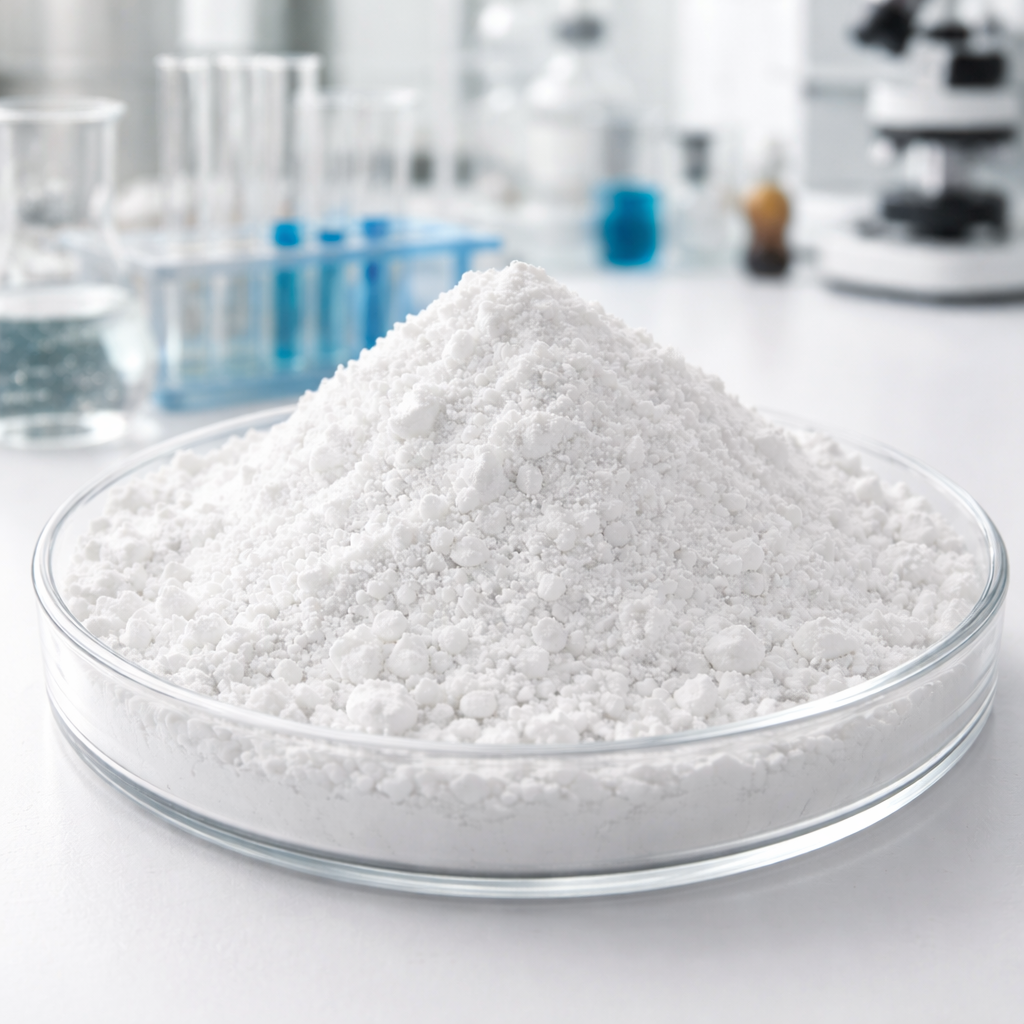
(May 29, 2026) As the second quarter of 2026 comes to an end, the domestic silica industry has exhibited a distinct pattern characterized by "competition at the lower end, shortages at the higher end, and an accelerated shift towards sustainability." As the world's largest producer of silica, China's total production capacity has exceeded 3 million tons. However, structural contradictions have become prominent. Coupled with the deepening of "dual carbon" policies and the expanding demand for new energy and green tires in the downstream sector, the industry is rapidly transitioning from scale expansion to higher-end, more environmentally friendly, and more customized products, making it one of the most dynamic fields in the field of chemical new materials.
Market Overview: Stable prices, supply-demand mismatch, and significant industry differentiation
As of May 28, 2026, prices in the domestic silica market have remained stable. According to data from Bizyshe, the benchmark price for silica is 6066.67 yuan per ton, with minimal fluctuations this month. In Shandong region, the tax-inclusive price for precipitation-derived rubber-grade silica ranges from 5100 to 6000 yuan per ton, while in Fujian it ranges from 5000 to 5800 yuan per ton, indicating intense price competition. Due to high technical barriers, the price of fumed silica remains high, with products with a specific surface area of 200 reaching prices of 21000 to 36000 yuan per ton, creating a significant price difference compared to precipitation-derived silica.At the supply and demand level, the mismatch between "excess in the lower end and shortage in the higher end" within the industry continues to worsen. There is an oversupply of general-purpose precipitated silica, while the growth rate of traditional downstream demands such as tires and ordinary rubber has slowed down, leading to pressure on the prices of low-end products and thin profits, thus intensifying competition within the industry. On the other hand, the high-end market is in short supply of high-dispersity silica, hydrophobic modified silica, food/pharmaceutical-grade specialty materials, and special silicas for lithium batteries and photovoltaics. Approximately 35% of high-end models still rely on imports, indicating a large potential for domestic substitution.
On the demand side:- Traditional sectors are recovering, while emerging markets are experiencing explosive growth
In traditional sectors, the tire industry remains the largest consumer of silica, accounting for over 60%. With the recovery of domestic automobile consumption and the implementation of the third phase of EU labeling regulations, the penetration rate of green tires is increasing, driving demand for high-dispersity silica and helping to reduce industry inventory steadily.
Demand in fields such as footwear materials and rubber products is stable, providing support for the basic performance of the industry.
Emerging sectors have become a core driver of growth, with demand showing explosive increases.
In the new energy sector, silica serves as a key ingredient for lithium battery separator coatings, electrolyte additives, and reinforcing fillers in silicone rubber, with demand growing by more than 40% year-on-year.
In agriculture, the application of agricultural silicone additives and soil improvers has opened up new growth opportunities.
In the 3C electronics and photovoltaic sectors, there is rapid demand for photoresist dispersants and anti-aging additives for photovoltaic encapsulation adhesives, effectively offsetting growth bottlenecks in traditional markets.In addition, the increase in overseas orders has contributed to the improvement of export performance. By 2025, the gross profit margin on the export of fumed silica will be higher than that of domestic sales, making it a new growth driver for the industry.
On the supply side: Expansion of green production capacity and accelerated technological breakthroughs are promoting domestic substitution
The structure of production capacity is continuously optimizing, with green and low-carbon production capacity being rapidly implemented. In 2026, new production capacity will be mainly concentrated in energy-rich regions such as Inner Mongolia and Shandong. For example, the 150,000 tons per year green and low-carbon project of Quecheng Co., Ltd. and the high-end fumed silica project of Dongyue Silicone Products will reach full production capacity in the second quarter. These projects adopt green technologies such as using calcium carbide slag instead of limestone and recovering waste heat, resulting in a reduction of carbon emissions by more than 30%. At the policy level, at the beginning of 2026, the National Development and Reform Commission issued guiding opinions that set phased targets for controlling carbon intensity, aiming to encourage the industry to phase out outdated production capacity. It is expected that by the end of the year, all batch-production facilities with an annual output capacity of less than 30,000 tons per line will be phased out, further increasing industry concentration.
Significant technological innovations have led to accelerated progress in domestic high-end manufacturing. Recently, many local companies have made breakthroughs in key processes such as hydrophobic modification, surface grafting, and nano-dispersion. As a result, the application performance of modified fumed silica in areas such as rubber, silicone products, and coatings has greatly improved.The gradual adoption of continuous processes such as microchannel reactors has resulted in a more uniform particle size distribution of the produced silica. This improvement can reduce the rolling resistance of tires by 12%-15%, meeting the development needs of green tires. The breakthrough in gas-phase silica technology is particularly notable, as companies like Quede Co., Ltd. and Chenguang New Materials have gained the capability to compete directly with international giants, thereby breaking the monopoly of foreign-made high-end products.
Future Trends: High-endization, Greenification, and Globalization as Core Directions
Looking ahead to the second half of 2026, the silica industry is expected to continue its trend of structural differentiation, with three main trends driving its development. The first is high-endization: The upgrading of downstream industries will drive an ongoing expansion in demand for high-value-added products, and companies will accelerate their presence in specialized material markets such as lithium batteries, photovoltaics, and pharmaceuticals, accelerating the process of domestic substitution. The second trend is greenification: With the continuous reinforcement of "dual carbon" policies, green production processes like rice husk utilization and waste heat recovery will become standard practices, making low-carbon silica a core competitive advantage for companies. The third trend is globalization: Leading domestic companies will leverage their cost and technological advantages to accelerate their expansion into overseas markets, increasing their export share. At the same time, they will integrate overseas production capacity through mergers and acquisitions to build a global industrial system.Industry experts believe that the fumed silica industry has left behind the era of unregulated growth. In the future, competition will focus on technological innovation, green production practices, and customized services. Leading enterprises that possess high-end production capacities, core technologies, and stable customer bases will continue to benefit, while outdated and low-end production capacities will gradually be phased out by the market, thus accelerating the formation of a high-quality development pattern for the industry.
http://www.siliconeoil.net