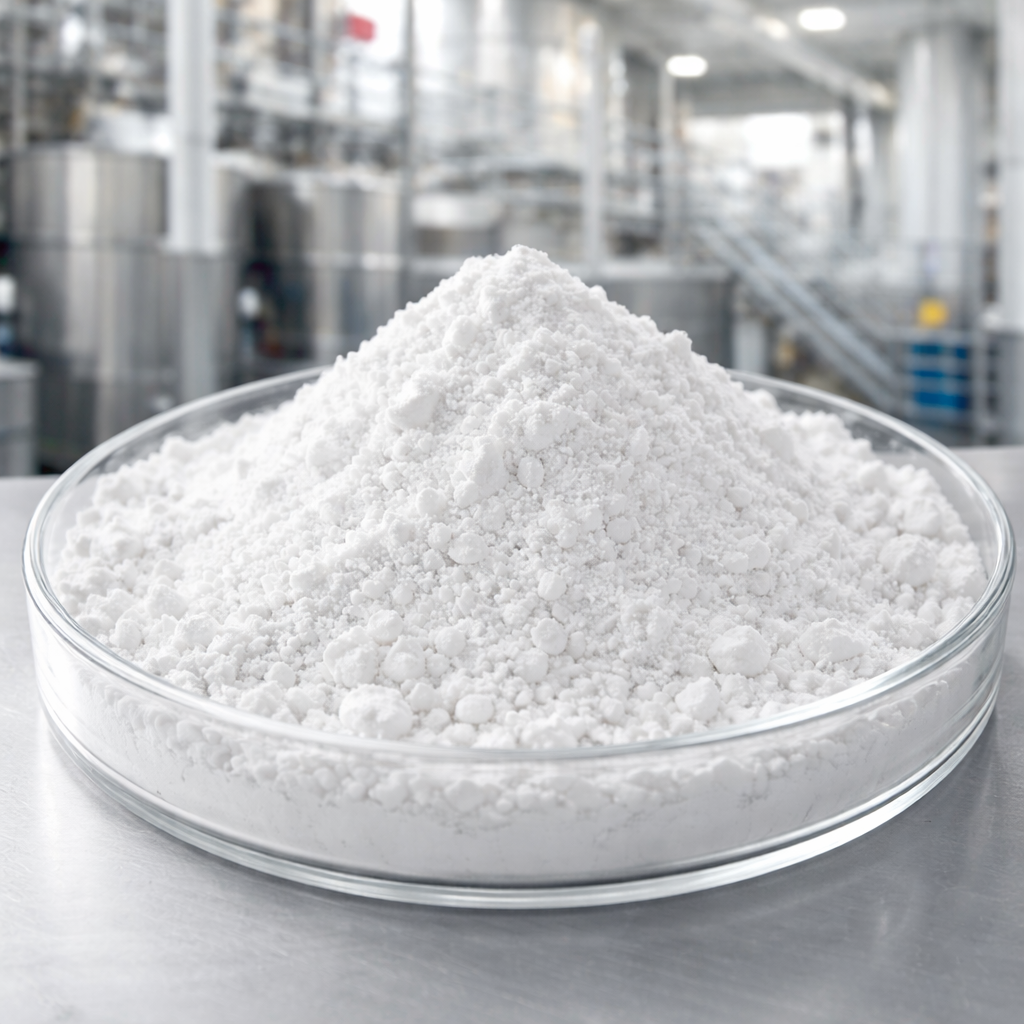
(May 24, 2026) Against the backdrop of accelerated iteration in the fine chemical new materials industry, the silica industry is moving away from the traditional scale competition model and shifting toward a new stage of high-quality development centered on technology R&D, product innovation, and application expansion. Today, based on multiple sources of information including industry R&D trends, new product launches, technological upgrades, and niche market layouts, domestic white carbon black companies are increasingly focused on technology tracks and focus on the high-end market. Technological empowerment is becoming a key lever for breaking through development bottlenecks and enhancing core competitiveness.
As a functional powder material, silica's performance indicators directly determine the quality of downstream end products. For a long time, the domestic market has been dominated by mid- to low-end precipitation process products, with severe product homogenization, and the high-end sector has long relied on external supply. In recent years, domestic companies have increased investment in scientific research, focusing on core technologies such as production process improvement, particle size control, and surface modification, gradually breaking down technical barriers. Currently, several high-end products such as modified silica, ultra-fine silica, and high-purity fumed-phase silica have achieved mass production, continuously benchmarking against international advanced standards in performance, stability, and adaptability, accelerating the import substitution process.
Upgrading production processes is a key pillar of this industrial transformation. Traditional silica production has issues such as high energy consumption and low by-product utilization. Now, many leading enterprises are promoting greener and intelligent production line upgrades. By optimizing reaction processes, introducing a closed-loop water circulation system, and building an intelligent central control platform, not only is water, electricity, and raw material consumption significantly reduced, but real-time monitoring throughout the entire production process is achieved, and the defect rate of products has dropped significantly. Some companies have made special optimizations for the precipitation process, developing specialized models with low oil absorption and high dispersion properties, precisely matching the stringent standards of high-end rubber and eco-friendly coatings. The product advantages brought by process upgrades are gradually transforming into market advantages.
From the perspective of segmented application markets, emerging industries are opening up new growth opportunities for high-end silica. In addition to stable demand in traditional rigid markets such as tires, general rubber and plastics, and daily chemicals, emerging sectors such as new energy, electronics and electrical appliances, high-end sealing materials, and biomedicine are seeing rapid increases in demand for silica. In the new energy industry, silica is widely used in battery separators, photovoltaic films, and new energy wiring harness sheaths due to its excellent reinforcement, thermal insulation, and insulation properties; In the electronics field, high-purity fumed silica is used in electronic sealants and thermal conductive materials to ensure stable operation of precision electronic equipment. Unlike traditional market models focused on price, emerging fields place greater emphasis on product customization capabilities and technical service levels, forcing companies to transform from mere material suppliers to "material technology solutions" service providers.
In terms of market structure, with tightening environmental policies and raising technical barriers, industry reshuffling continues. Outdated and inefficient capacity is rapidly being phased out, and market resources are increasingly concentrated among leading companies with core technologies, complete industrial chains, and stable customer bases. Small and medium-sized manufacturers are also shifting their business strategies, no longer blindly expanding general products, but instead targeting niche segments, deeply cultivating certain specialized white carbon black products, pursuing specialized and refined development paths, and forming a differentiated competitive landscape. Currently, the overall supply-demand structure of the industry is becoming more reasonable, competition among low-end products is slowing, and high-end products remain tight due to technological scarcity, making market profit margins more considerable.
Industry experts analyze that the white carbon black industry is currently at a critical window of transformation and upgrading. In the short term, demand from emerging downstream industries continues to be released, and combined with the results of process transformation, the high-end product market is looking positive; In the medium to long term, technological innovation capability will become the core lifeline for enterprises to establish themselves in the market. In the future, industry development will continue to focus on three main directions: green production, functional modification, and customized services.
Facing a new market environment, the domestic white carbon black industry must not only continuously strengthen its technological R&D capabilities and address shortcomings in some high-end niche fields, but also closely follow the development trends of emerging downstream industries and proactively plan for cutting-edge application scenarios. Relying on the advantages of a well-developed local industrial chain and a huge domestic market, the domestic silica industry is expected to continue expanding its technological and product advantages, occupy a more important position in the global market, and drive the entire fine powder materials industry to new heights.