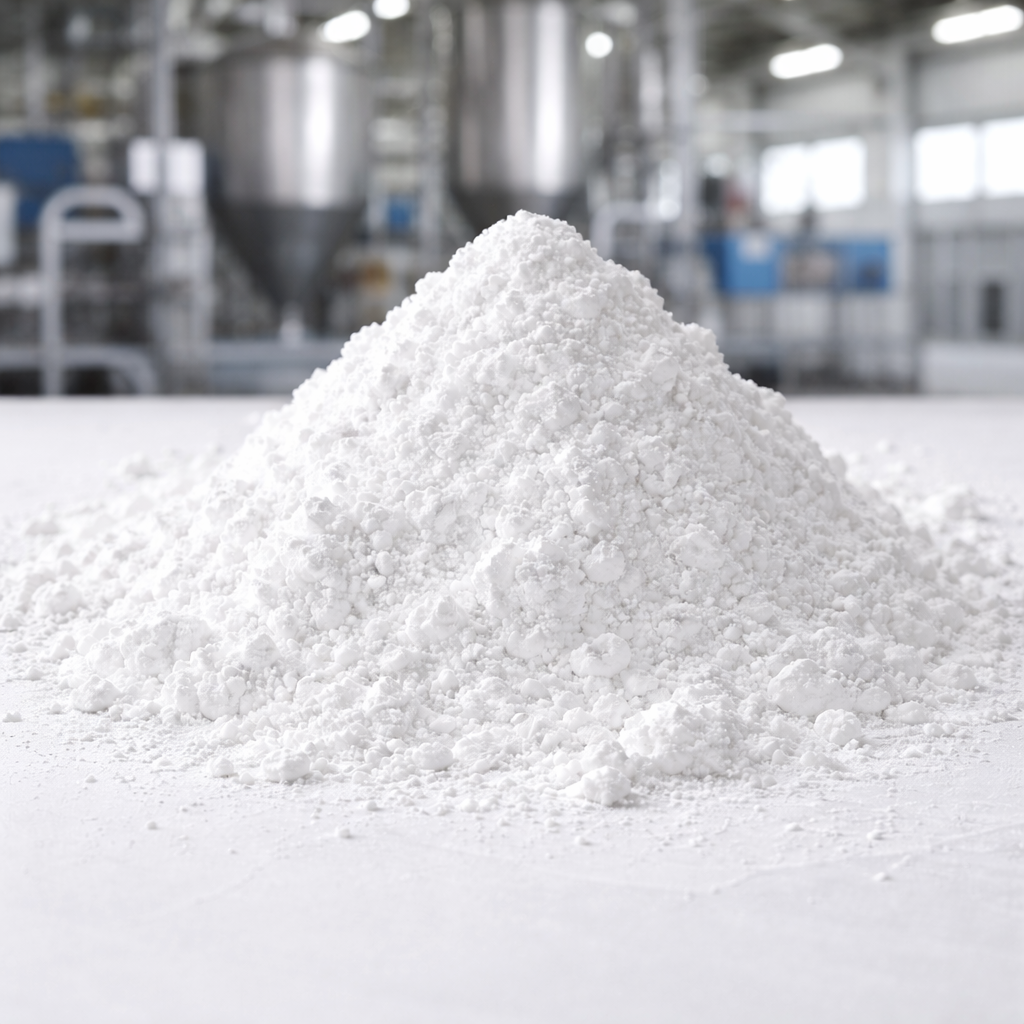
(May 9, 2026) Entering May 2026, the domestic silica (precipitated silica) industry is accelerating towards a new development stage of green and low-carbon, high-end customization, and production capacity optimization, driven by the triple drive of new environmental protection policies, cost fluctuations, and expansion of downstream high-end demand. The latest market data shows that silica prices remain high and stable, the structural differentiation of the industry has intensified, and highly dispersed and functional products have become the core of competition. At the same time, the implementation of tens of billions of green projects has accelerated, and industrial upgrading has entered a critical window period.
1. Market prices: stabilizing at a high level, and price differences among subdivided varieties widening
As of May 8, 2026, the mainstream quotation in the domestic silica market has stabilized at 5,800-6,200 yuan/ton, which is the same as the end of April and a cumulative increase of 12%-18% from the end of 2025. Cost support is strong.
Rubber grade silica (precipitation method, SiO₂≥90%): market price in Jinan, Shandong is 5,800 yuan/ton, mainstream ex-factory price is 5,700-5,900 yuan/ton;
Ultra-fine/high-end special silica (above 1300 mesh, pesticide/paint and ink grade): ex-factory price is 6200-6500 yuan/ton, and food grade quotation reaches 6500 yuan/ton, with a significant premium;
Price trend: Since the beginning of May, market transactions have been stable and corporate quotations have been firm. Due to the high and volatile prices of raw materials such as sulfuric acid and soda ash, there is little room for price downwards in the short term. It is expected that prices will maintain a high and narrow range of fluctuations in mid-to-late May.
2. Industrial policy: Environmental protection and “double carbon” are pressing, and green process innovation is accelerating
In the second quarter of 2026, domestic zero-carbon factory construction, dual energy consumption control and environmental emission standards have been upgraded again. The high energy consumption and traditional acidification process production model of the silica industry has been fully restricted, and strong policy constraints have been formed.
Policy dividends: Multiple ministries and commissions jointly issued guidance details for the low-carbon transformation of the manufacturing industry, clearly supporting the research and development and industrialization of green processes such as carbon dioxide acidification and solid waste recycling, and providing tax exemptions and subsidy support for zero-carbon factory projects;
Production capacity reshuffle: Environmental protection production restrictions in major production areas such as Shandong, Jiangxi, and Fujian continue, small and medium-sized backward production capacity is being cleared at an accelerated pace, industry concentration is further enhanced, and leading companies are seizing the market with their technology and scale advantages;
Benchmark project: In early April, the 200,000 tons/year carbon dioxide acidification method silica project (Phase I) was launched in Weifang, Shandong Province, with a total investment of 1.02 billion yuan and a first-phase investment of 360 million yuan. It will have an annual output of 60,000 tons of high-end silica after completion. It is expected to be put into production in February 2027, providing a demonstration for the green transformation of the industry.
3. Downstream demand: explosion of high-end scenarios and revaluation of functional value
In the second quarter of 2026, the demand structure for silica will continue to be optimized, with rubber tires, industrial coatings, daily cosmetics, cosmetics, electronic seals, silicon-based composite materials and other fields simultaneously increasing volume, promoting the transformation of products from ordinary filling raw materials to high-end functional new materials.
New energy vehicle tires: The increased production and sales of new energy vehicles have driven the demand for green tires. Highly dispersible silica can reduce tire rolling resistance and increase cruising range. The related market segments have grown by more than 15%, becoming the core growth engine of the industry;
Coatings and daily chemicals: In the coating field, silica is used for anti-settling, thickening, and matting. In the daily chemical field, it is used for whitening and anti-caking in toothpaste and cosmetics. The demand is growing steadily, and the requirements for product purity and dispersion continue to increase;
Emerging fields: The application of hydrophobic and conductive silica is accelerating in the fields of electronic packaging, battery separators, photovoltaic materials, etc. The premium ability of customized products has been significantly enhanced, becoming the new focus of competition among leading companies.
4. Cost and technology: pressure on raw materials still exists, high-end breakthroughs in localization
On the cost side, the prices of industrial soda ash, quartz sand, electricity and gas remain high, especially the price of sulfuric acid, which has increased by more than 150% from the low point in 2025, directly pushing up production costs. After the price increase, companies still find it difficult to fully cover the gap, and the overall situation is in a passive state of making up for losses. On the technical side, the localization rate of highly dispersible silica has increased rapidly. The product performance of some leading companies has been benchmarked with international brands.
Technologies such as hydrophobic modification and surface treatment have continued to make breakthroughs, helping companies seize the high-end market.
5. Industry Outlook: May Trends and Long-term Opportunities
In the short term, the silica market will maintain high prices, stable transactions, and structural differentiation in May. Environmental protection production restrictions and cost support are strong, and demand for high-end products continues to improve. In the long term, driven by the "dual carbon" goal, the popularization of new energy vehicles, and the expansion of downstream high-end demand, the silica industry will accelerate its transformation to green, high-end, and differentiation. Enterprises with technical reserves, cost control capabilities, and downstream collaborative innovation capabilities will occupy an advantageous position in the new round of competition.
http://www.siliconeoil.net