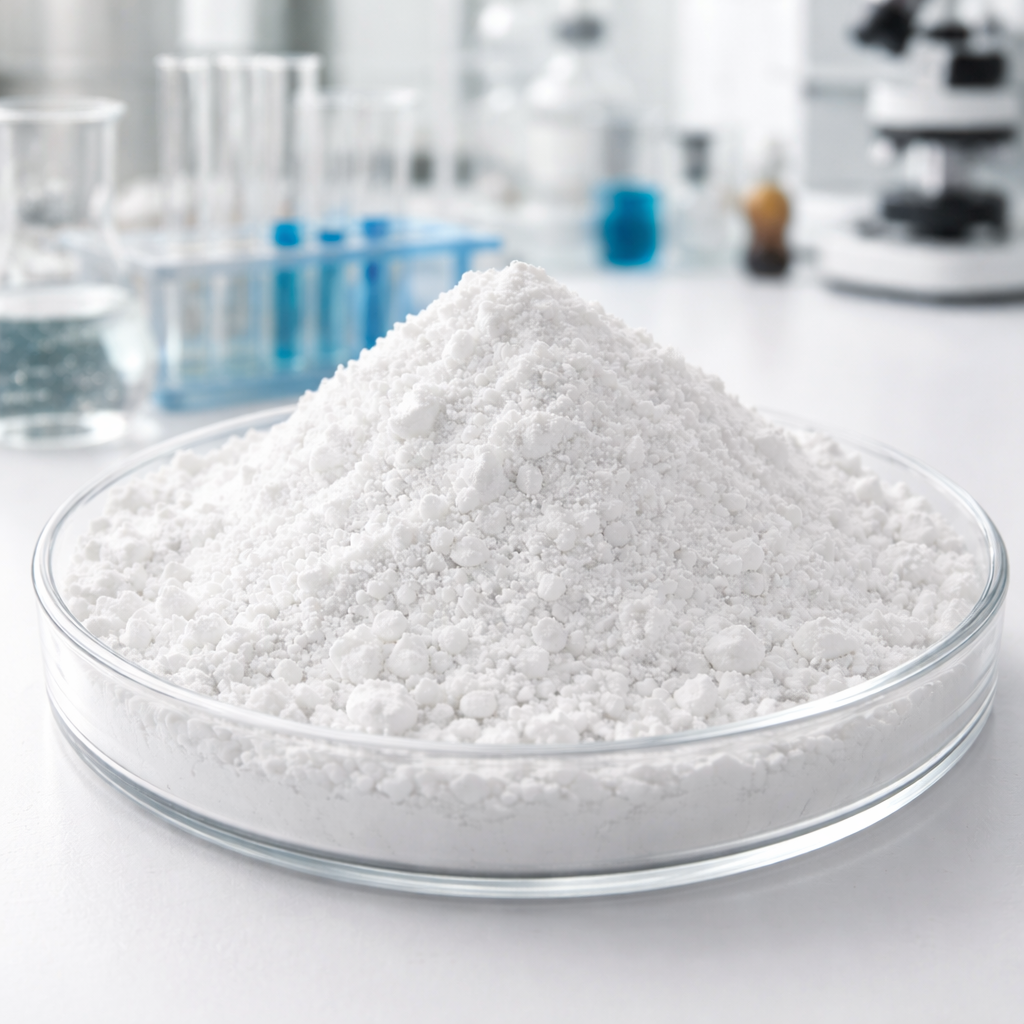
(April 27, 2026) Recently, the domestic silica market has shown an overall pattern of "strong cost support, high and stable prices, tight supply of high-end goods, and accelerated green transformation". The prices of sulfuric acid and soda ash on the raw material side continue to be high, and the demand for downstream tires, silicone rubber, coatings and other industries has picked up, and the industry prosperity has remained high. At the same time, the implementation of new low-carbon projects, the accelerated clearance of backward production capacity, and the breakthrough of patented technologies have promoted the deep transformation of the industry to high quality, green, and clustering.
1. Market price: stable at a high level, strong cost support
As of April 27, the domestic silica market price continued to maintain stability at a high level in the previous period, and the price adjustment cycle basically ended.
General type of precipitation method: the benchmark quotation is about 6067 yuan/ton;
Rubber special grade: the mainstream quotation is 6300-7000 yuan/ton;
High-end gas phase method: the price is strong, the quotation is 16000-32000 yuan / ton, and the supply is tight.
On the cost side, sulfuric acid prices have skyrocketed since the beginning of the year, hitting a new high in nearly 20 years (1742.5 yuan/ton) in early April, and the prices of raw materials such as soda ash and coal are running at a high level, continuing to push up production costs and providing strong support for silica prices. At the beginning of April, a number of companies have issued letters to raise the ex-factory price by 500 yuan/ton to cope with cost pressure.
2. Production capacity dynamics: low-carbon projects have been implemented, and backward production capacity has been cleared at an accelerated pace
The industry capacity structure continues to be optimized, green and low-carbon projects have become the mainstream of investment, and the elimination of backward production capacity has increased.
Large-scale low-carbon project landing: The 200,000 tons/year carbon dioxide acidification silica project (phase I) in Changle County, Weifang, Shandong Province was announced in early April, with a total investment of 1.02 billion yuan, an investment of 360 million yuan in the first phase, and an annual output of 60,000 tons, and is expected to be put into operation in February 2027. The process adopts CO₂ acidification, which is low-carbon and environmentally friendly, and is in line with the direction of green transformation of the industry.
Technological upgrading and elimination of backward production capacity: Jiangsu and other places have implemented new regulations since the beginning of the year to restrict non-gas-phase and non-CO₂ acidification process devices, and eliminate ordinary production capacity below 15,000 tons/year. Sanming Fengrun Chemical and other enterprises have invested tens of millions of yuan in "coal-to-gas" technical transformation to replace backward coal-fired equipment and simultaneously improve environmental protection and energy efficiency.
Industry concentration increases: In 2026, the industry CR10 (concentration of top ten enterprises) will rise to 42%, and leading companies such as Quecheng Co., Ltd., Jinneng Technology, and Black Cat Co., Ltd. will continue to expand their market share by virtue of their industrial chain advantages.
3. Technology and exports: patent breakthroughs, high-end orders growth
Technological innovation and overseas market expansion have become new engines for industry growth.
Green patent technology breakthrough: On April 23, Shaanxi Saikoris applied for a patent (CN121894667A) for "rice husk ash to prepare silica", which uses agricultural waste rice husk ash as a silicon source through microwave-assisted high-pressure spray carbonization process to achieve recycling, improve rubber reinforcement performance, and provide a new path for the industry's low-carbon transformation.
Export orders increased year-on-year: Since April, export orders for highly dispersed, food-grade, green and low-carbon silica have increased by more than 20% year-on-year, with Southeast Asia, Europe, and the Middle East as the main incremental markets.
4. Industry trends: greening, high-end, clustering
Looking forward to the future, the silica industry will continue to develop in three directions:
Green and low-carbon: CO₂ acidification, biomass raw materials (rice husk ash), and energy-saving technological transformation have become mainstream, responding to the "dual carbon" goal and EU CBAM carbon tariff requirements;
High-end: high dispersion, low rolling resistance (for green tires), food/pharmaceutical grade, gas-phase products are in high demand, and the premium ability is strong;
Clustering: Shandong, Fujian, Jiangsu and other major producing areas have accelerated the construction of industrial clusters, with complete supporting facilities and highlighted synergies.