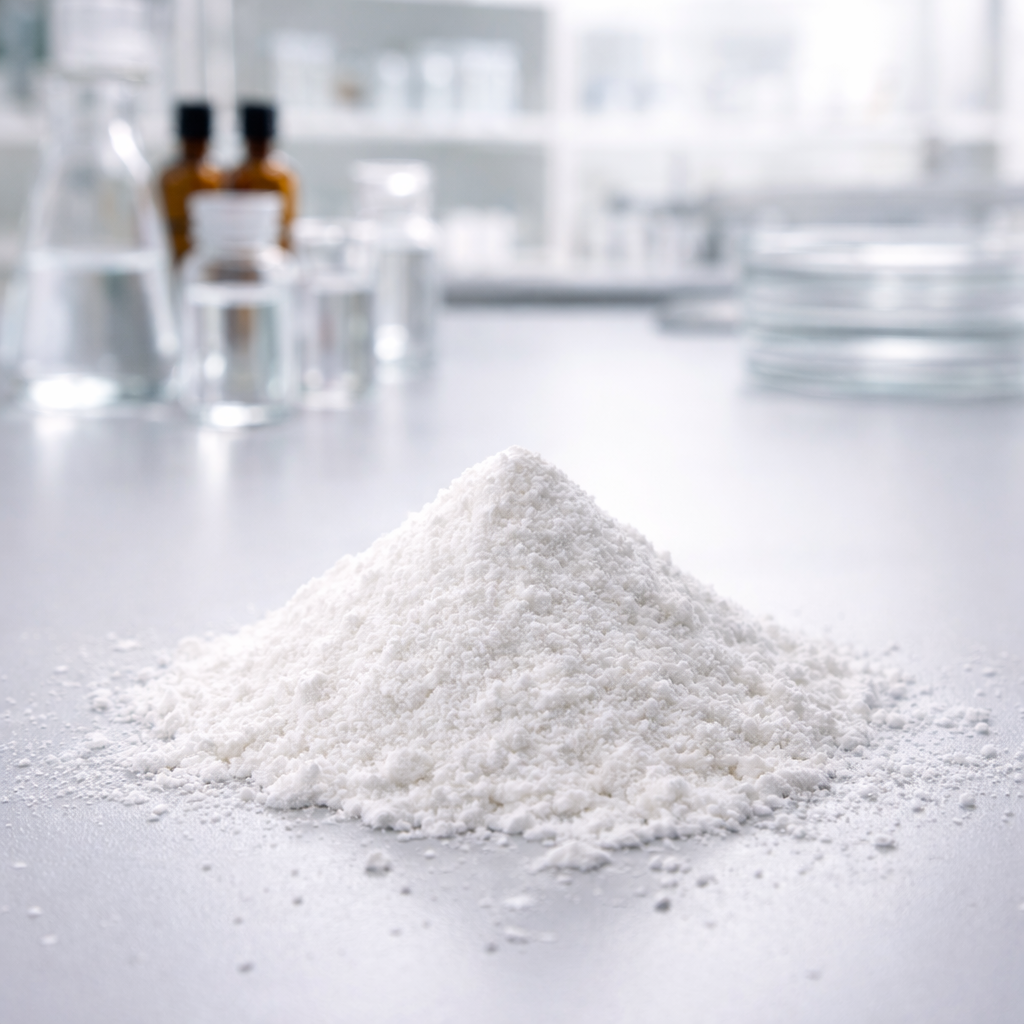
(April 24, 2026) Against the backdrop of the deepening green transformation of the domestic chemical industry and the continuous rise in global demand for high-end silicon materials, the domestic fumed silica (hydrated silicon dioxide) industry is facing an unprecedented period of transformation and challenge. As of April 24, the domestic fumed silica market has maintained a high level of stability, with the product structure continuously improving, green production technologies being rapidly implemented, and the regional capacity layout being refined. The collaboration between upstream and downstream industries is driving a profound shift from "scale expansion" to "quality improvement" and "high-end breakthrough," significantly enhancing the quality and core competitiveness of the industry.
As a versatile inorganic silicon material, fumed silica is widely used in tire manufacturing, silicone rubber, coatings, adhesives, food additives, pharmaceutical excipients, and other fields. The quality of fumed silica products is directly related to the pace of advancement in downstream industries. In recent years, with the tightening of domestic environmental policies, the upgrading of demand in high-end sectors, and the surge in demand for high-quality fumed silica products in overseas markets, the domestic fumed silica industry is moving away from past challenges such as excess low-end capacity, insufficient high-end supply, and prominent environmental issues. It is gradually establishing a new development pattern characterized by green practices, scale expansion, and high-end differentiation.In terms of market operations, as of April 24, the prices of domestic white carbon black have shown a distinct pattern of "stable prices for general products and tight supply for high-end products," with both the cost side and the demand side supporting the prices at a high level.
Specifically, the benchmark price for general-purpose white carbon black produced by the precipitation method has remained stable at 6050-6100 yuan per ton, unchanged from the same period last month. White carbon black specifically for the rubber industry, due to the strong demand from the downstream tire industry, is traded at mainstream prices of 6300-7000 yuan per ton. High-end, highly dispersed products are quoted at 7200-7500 yuan per ton. For white carbon black produced by the gas-phase method, there is a continuous shortage in the market due to low operating rates of upstream methyl monomer production plants and insufficient supply of high-end capacity; therefore, the price for ordinary gas-phase products ranges from 16,000 to 22,000 yuan per ton. The prices for high-end electronic and food-grade gas-phase white carbon black are as high as 28,000 to 32,000 yuan per ton. Some scarce types are even subject to closed-book negotiation, with prices increasing slightly by 3%-5% compared to the same period last month.
Regarding the cost side, the prices of key raw materials used in white carbon black production, such as sulfuric acid, soda ash, and coal, remain at high levels in recent years, serving as a crucial foundation for supporting product prices.
According to domestic chemical raw material monitoring data, as of April 24, the average price of 98% sulfuric acid in the market was 1,280 yuan per ton, the average price of industrial soda ash was 2,350 yuan per ton, and the average price of thermal coal was 890 yuan per ton. The prices of these three core raw materials increased by 12.3%, 8.7%, and 5.2%, respectively, compared to the same period last year, which directly drove up the production costs of silica gel. Industry insiders stated that domestic silica gel companies have already undergone several price adjustments, and the current cost pressures are gradually being absorbed. In the short term, the fluctuations in raw material prices are limited, so the market price for silica gel is expected to remain stable. The future trends will be closely monitored based on the supply of upstream raw materials, new production capacity addition, and changes in downstream demand.
On the demand side, various downstream sectors are steadily resuming operations and activities, leading to continuous demand for essential purchases. At the same time, the upgrade in demand in high-end areas has caused a surge in demand for high-end silica gel products. The tire manufacturing industry, which accounts for more than 65% of silica gel usage, is seeing increased demand for high-performance tires due to the recovery of the domestic automotive industry and the ongoing increase in the penetration rate of new energy vehicles. This has led to a significant rise in demand for silica gel with high dispersion and low rolling resistance.
Major domestic tire companies have increased their purchases of high-end silica gel, resulting in a year-on-year increase in sales volume of related products by more than 18%.In addition, the demand in fields such as silicone rubber, coatings, and food additives has also steadily increased. Food-grade silica, in line with the trends towards health, safety, and environmental protection, has seen a year-on-year increase of 25% in demand, becoming a new growth highlight for the industry. Electronic-grade silica, with its advantages of high purity and fine particle size, is gradually replacing imported products and being used in high-end fields such as semiconductors and electronic components, with its market potential continuing to be unleashed.
In terms of industrial transformation, green upgrading has become the core driver of industry development. New low-carbon technologies and processes are being rapidly implemented and promoted, while outdated and low-end production capacities are being phased out. In recent years, domestic authorities have significantly strengthened environmental regulations for the chemical industry, introducing several policies to drive the green transformation of the silica industry. These policies require the elimination of low-end silica production facilities with an annual capacity of less than 15,000 tons and highly polluting production processes, and encourage companies to undertake environmental improvements and upgrades. Against this backdrop, domestic silica companies have increased their investment in green technology research and development, with several low-carbon production technologies achieving breakthroughs and being put into practical use.
Among them, the latest patented technology approved by Shaanxi Sairuisi Chemical Co., Ltd., "Resource utilization of rice husk ash for the production of high-purity silica," serves as a typical example of the industry's green transformation.This technology uses rice husk ash, a type of agricultural solid waste, as the silicon source, replacing traditional materials such as quartz sand and water glass. Through a series of processes including alkaline solution pretreatment, microwave-assisted purification, composite modification, and high-pressure spray carbonization, high-quality silica products with a purity of over 99.8% are produced.
Compared to traditional methods, this technology enables the 100% utilization of rice husk ash as a resource. It can process more than 100,000 tons of agricultural solid waste annually, reducing carbon dioxide emissions by approximately 80,000 tons. At the same time, it significantly lowers the cost of raw materials. The resulting silica products have superior dispersibility and reinforcing properties compared to traditional ones and can be widely used in applications such as tire rubber and polymer material filling. Currently, the company has commenced the construction of a project to produce 20,000 tons of silica from rice husk ash per year, with completion and production expected by the end of 2026. Once operational, this will further enhance the domestic supply capacity of green silica.
In addition to solid waste recycling technologies, new low-carbon processes such as carbon dioxide acidification and membrane separation for purification are also being gradually adopted. Several large silica manufacturers in Shandong, Jiangsu, and other regions have started projects using the carbon dioxide acidification method. For example, a chemical company in Shandong has invested over 1 billion yuan in a project to produce 50,000 tons of silica per year using this method. The main construction has been completed, and the equipment is currently being tuned up; production is anticipated to begin in the first quarter of 2027.This process uses carbon dioxide as the acidifying agent, replacing the traditional sulfuric acid acidification process, which can significantly reduce sulfuric acid consumption and lower wastewater emissions, achieving the transformation of waste into a valuable resource. This aligns with China's "dual carbon" strategic objectives and will push the environmental protection level of the silica industry to new heights.
In terms of regional capacity distribution, domestic silica production capacity is gradually concentrating in areas with abundant resources and well-developed environmental infrastructure, forming a pattern of "centralization in the east and rise in the central and western regions." The eastern region, leveraging its geographical advantages and the concentration of downstream industries, remains the core area for silica production capacity. Provinces such as Shandong, Jiangsu, and Zhejiang account for more than 60% of China's silica production capacity, mainly featuring large-scale enterprises that produce mid-to-high-end products and have complete industrial chain support. The central and western regions are building their silica production capacity by relying on local resources such as coal and silica mines. New projects are being established in Shaanxi, Sichuan, Inner Mongolia, and other places, focusing on the development of green and large-scale silica production to gradually fill regional capacity gaps while also driving the transformation and upgrading of the local chemical industry.
In terms of advancing towards higher-end products, domestic companies are continuously increasing investment in research and development to break foreign monopolies in the high-end silica market. The export volume of domestically produced high-end silica has been steadily increasing.Previously, high-end fumed silica and electronic-grade fumed silica in China mainly relied on imports, with foreign companies occupying more than 80% of the domestic high-end market due to their technological advantages. In recent years, domestic companies have made continuous breakthroughs in the field of high-end fumed silica technology through independent research and development, as well as collaboration among industry, academia, and research institutions. They have successfully localized the production of electronic-grade, food-grade, and medical-grade fumed silica, with product quality reaching international advanced levels.
According to the latest data from the General Administration of Customs, exports of high-end fumed silica in China have been on the rise since April. From January to April, the volume of high-end fumed silica exports increased by 22.3% year-on-year, and the export value increased by 28.7% year-on-year. Southeast Asia, Europe, and the Middle East have been the main markets for growth, with the Southeast Asian market seeing a 30.5% increase in exports and the European market a 25.1% increase. Domestic high-end fumed silica is gradually replacing imported products due to its cost-effective advantages, gaining more market share internationally and enhancing its competitiveness. Industry experts suggest that with the expansion of domestic production capacity and improvements in technical standards, the import substitution rate for high-end fumed silica is expected to rise to over 60% within the next 3-5 years.
The export market is also expected to expand into regions such as America and Oceania.At the same time, the coordinated development of the upstream and downstream industries of fumed silica is becoming increasingly evident. Companies are actively strengthening their cooperation with upstream raw material suppliers and downstream application enterprises to build a symbiotic industrial ecosystem. On the upstream side, fumed silica manufacturers have established long-term strategic partnerships with sulfuric acid and soda ash producers to secure a stable supply of raw materials and reduce the risks associated with price fluctuations. On the downstream side, fumed silica companies collaborate with tire and silicone rubber manufacturers in research and development efforts, customizing products to meet specific industry needs and enhancing product compatibility, thereby promoting the upgrading of the downstream industries. For example, a major domestic fumed silica company has partnered with a renowned tire manufacturer to develop highly dispersed fumed silica products that reduce rolling resistance by more than 15%, improving the range of electric vehicles and achieving mutual benefit.
However, the domestic fumed silica industry still faces several challenges during its transformation and development: First, there are shortcomings in advanced core technologies; the particle size distribution and dispersion of some high-end products still fall short of international standards, and core production equipment relies on imports. Second, the industry's concentration needs to be increased, as there are many small and medium-sized enterprises with inadequate environmental protection facilities and outdated technology, leading to competitive homogenization. Third, significant fluctuations in raw material prices put considerable pressure on companies' cost control.In response to the aforementioned issues, industry experts suggest that relevant enterprises should continue to increase investment in technology research and development, focusing on overcoming the challenges of domesticating core technologies and equipment for the production of high-end silica. This will enhance product quality and add value. They should also accelerate industry consolidation, promote mergers and reorganizations of small and medium-sized companies, and foster a group of large-scale, high-end leading enterprises to increase industry concentration. Enterprises should strengthen cooperation with upstream raw material suppliers to establish a stable supply system and actively expand into overseas markets to mitigate risks associated with domestic market fluctuations. Additionally, government authorities should further improve industry standards, strengthen environmental regulations to encourage green transformations, and introduce supportive policies to foster technological innovation and the construction of high-end production capacity, thereby promoting the high-quality development of the silica industry.
Overall, the domestic silica industry is currently in a critical period of transformation. Both green upgrades and the advancement of high-end technologies are driving progress, with the market supply-demand structure continuously improving and the quality of industrial development steadily rising. In the short term, the silica market is expected to maintain a stable performance at high levels. In the medium to long term, with the release of green production capacity, breakthroughs in high-end technologies, and the advancement of import substitution, the domestic silica industry is set to achieve high-quality development and become a core force in the global silica industry.