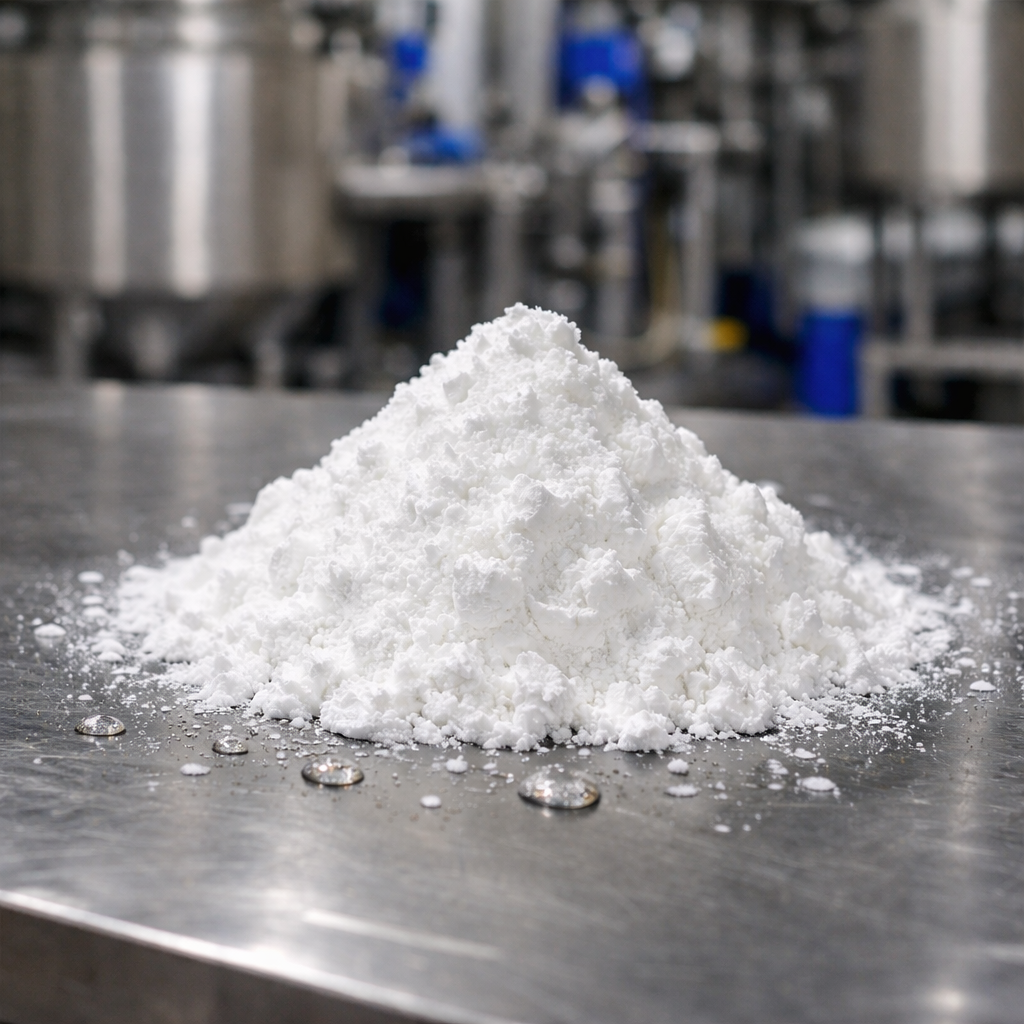
(April 21, 2026)As an important inorganic functional fine chemical material, fumed silica is essentially silicon dioxide produced by gas-phase or precipitation methods. Thanks to its excellent reinforcing properties, resistance to aging, dispersibility, thickening and thixotropic effects, as well as high physical stability, it has long occupied an indispensable position in the national industrial system. Recently, with the deepening of the development of China’s new materials industry, the accelerated technological advancements in various downstream sectors, and the continuous upgrading of environmental protection standards, the fumed silica industry has completely emerged from the low-end competitive landscape dominated by traditional general-purpose fillers. It is now experiencing new developments and changes in various aspects, including the refined research and development of products, the expansion into new downstream applications, the green transformation of the industrial chain, and the replacement of imported products with domestically produced alternatives. As a result, the overall development pattern of this industry is undergoing significant reshaping.
Looking at the current state of its development, for a long time in the past, China’s fumed silica industry was characterized by a large production capacity base. Most companies within the industry focused on producing general-purpose products of standard specifications, resulting in a high degree of product homogenization. Market competition was primarily based on price factors, leading to low product added value and continuous compression of corporate profit margins. In terms of high-end segments such as highly dispersed low-structure fumed silica, high-purity nanosilica, hydrophobic-modified fumed silica, food-grade and pharmaceutical-grade specialized fumed silica products, as well as modified silicone materials for new energy applications, there were previously significant technological barriers domestically, insufficient supply capacity, and a reliance on imported raw materials for some high-end products.Entering 2026, the strategy of promoting domestic autonomy and control in the development of new chemical materials continued to advance. Coupled with the high-standard material requirements brought about by the industrial upgrading of various downstream industries, the entire silica microsphere industry entered a critical period of structural transformation. The focus of enterprise development shifted entirely from expanding production capacity and mass production to improving product quality, advancing technology, and producing customized products.
The diversified growth of downstream application markets was the core driving force behind this industry transformation. In traditional application areas, the tire and rubber industry remained the largest consumer of silica microspheres. With the widespread adoption of national standards for green tires, the mass production of low-rolling-resistance, high-wear-resistant tires continued to expand. As a result, the tire industry placed increasing demands on the particle size distribution, oil absorption value, and surface activity indicators of silica microspheres. Conventional low-end silica microspheres were gradually phased out by the market, while the demand for high-performance precipitated silica microspheres continued to rise steadily. At the same time, in traditional fields such as coatings, inks, adhesives, plastic fillers, and everyday rubber products, downstream manufacturers increasingly demanded more stringent modifications to the production process and stricter control over impurity levels in order to enhance the weather resistance, resistance to yellowing, and stability of their end products. These demands compelled upstream producers to optimize their manufacturing processes.
In addition to the stable demand in traditional areas, the rapid rise of many emerging sectors has opened up new growth opportunities for the silica industry, making it the core driving force for future development in this field. In the new energy sector, the rapid growth of the battery industry has led to increased use of high-purity nanosilica in various applications such as separator coatings, battery sealants, and cell protective materials. These materials are used to enhance the insulating properties, stability, and high-temperature resistance of batteries. Similarly, the demand for specialized silica is on the rise due to the use of sealing materials and backing components in the photovoltaic industry. In the field of advanced personal care products, there is a continuous increase in demand for food-grade and medical-grade high-purity silica in applications such as toothpaste abrasives, skin care thickening agents, and matting materials. Product safety standards, heavy metal content, and particle size uniformity have become key competitive factors in this area. At the same time, industries such as high-end silicone rubber, composite materials, electronic insulation materials, and new building sealants are experiencing sustained expansion. As a result, the market demand for modified hydrophobic silica is growing year by year, and there is an ongoing gap in the high-end niche markets.
In terms of technology research and development as well as production processes, domestic silica manufacturers are increasing their investment in scientific research. They are continuously optimizing traditional precipitation-based production methods and improving entire processes involving reaction synthesis, washing and purification, drying and grinding, and surface modification. These efforts help to reduce impurity levels in products significantly and enable precise control over factors such as specific surface area, structural properties, and particle size, thus allowing for customized adjustments to product performance.At the same time, efforts have been made to overcome the technical challenges associated with the vapor-phase production of fumed silica. The product range has been expanded to include multiple specifications, and progress has been made in breaking the technological monopolies held by foreign companies in the high-end fumed silica market, thereby enhancing the domestic supply capacity of these materials. Numerous enterprises have collaborated with research institutions to establish new material research and development platforms, developing customized products for customers in various industries. By offering products with differentiated properties that meet specific downstream requirements, these companies are able to escape the traditional competition based on low-cost, homogenized products. Instead, they rely on their technical advantages to increase product profitability and their influence in the market.
The ongoing tightening of environmental policies has also had a profound impact on the overall supply structure of the industry. Traditional production methods for fumed silica require significant amounts of water and generate waste water, waste gas, and solid waste during the production process. In recent years, environmental inspections in China’s chemical industry have become increasingly stringent, leading to the accelerated elimination of outdated production capacities. Small-scale, inefficient enterprises that fail to meet environmental standards or have low resource utilization rates are gradually withdrawing from the market, resulting in a increasing concentration of production capacity within the industry. Leading companies are actively pursuing green transformation of their production processes, optimizing water recycling systems, improving waste gas treatment facilities, reducing energy consumption and pollutant emissions, and exploring low-carbon production pathways.
By balancing stable production capacity, improved product quality, and environmental protection requirements, the entire industry is moving towards more intensive, standardized, and environmentally sustainable development.The foreign trade sector has also exhibited new development trends. As the performance of domestically produced high-end silica products continues to approach international advanced standards and their quality stability gains recognition in global markets, the structure of China’s silica exports has been continuously optimized. China no longer simply exports low-priced, general-purpose products; instead, the proportion of high-dispersion, high-purity, and modified high-end products exported is on the rise. These products are sold to various regions, including Southeast Asia, Europe, the Americas, and the Middle East, and orders from overseas premium customers are steadily increasing. Additionally, the presence of a complete domestic industrial chain and stable production capacity have enhanced the competitiveness of Chinese-produced silica in the global supply chain, allowing China to occupy a more proactive position in the global trade landscape of new materials.
Industry experts analyze that, for a considerable period in the future, the development momentum of the silica industry will continue to focus on areas such as refinement, high-end specialization, target-specific applications, and environmental sustainability. Competition in the general-purpose product market will gradually ease, while demand for high-end specialized silica products will continue to grow rapidly. As domestic technological advancements deepen, industrial chains become more comprehensive, and new application areas expand, China’s silica industry will further undergo industrial upgrading. This transformation will enable China to shift from being a major producer of raw materials to a strong nation in the materials sector. By supporting the development of various industries such as renewable energy, high-end Rubber products, fine chemicals, and new materials domestically, China will also continue to expand its market opportunities globally and achieve sustainable high-quality development across its entire industrial chain.