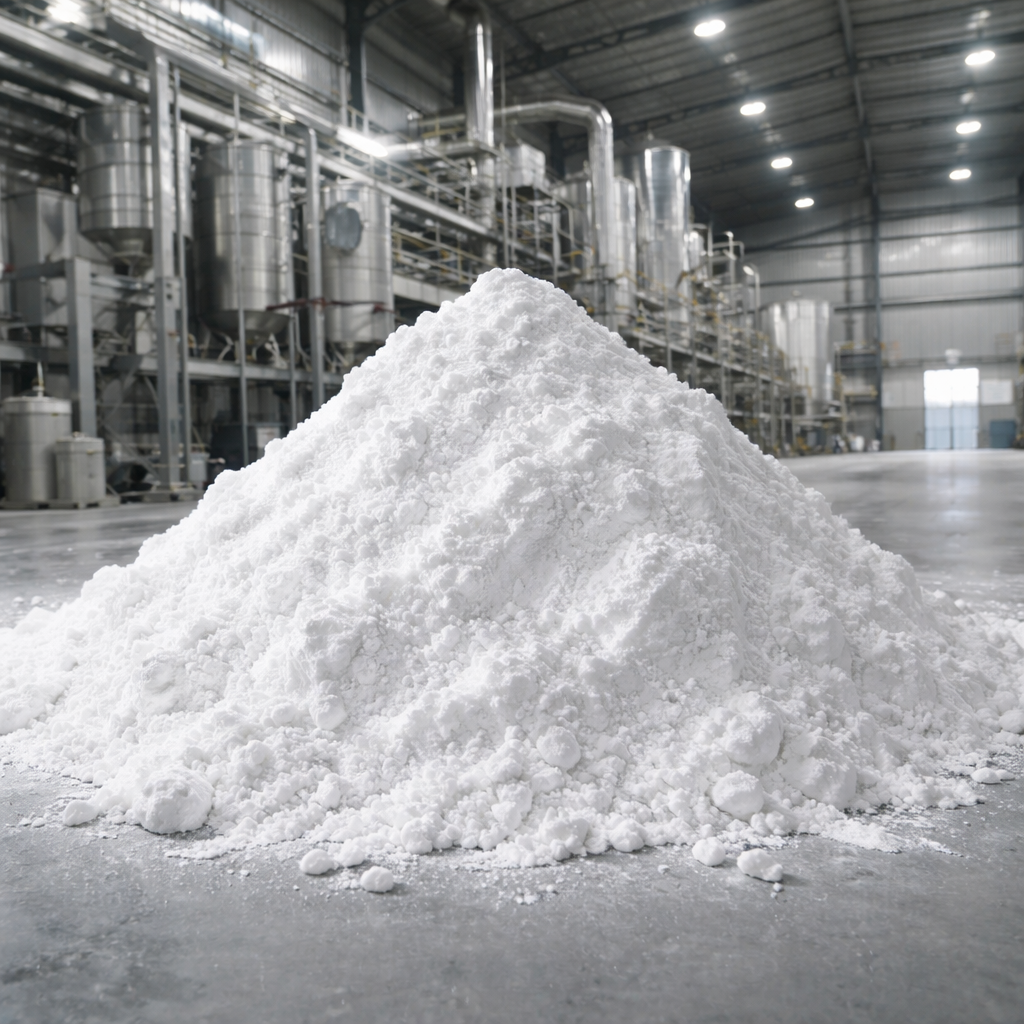
(June 4, 2026) Recently, the domestic silica industry has experienced multiple positive resonances. Driven by breakthroughs in domestic fumed silica technology, the expansion of new energy tire capacity, and the implementation of green, low-carbon technological upgrades, the industry is showing a structural trend characterized by stable prices for general products, tight demand for high-end specialty silica, and continuously rising export data. The industry has officially shifted from low-end capacity expansion to a new stage of high-precision, unique, and innovative green circular development.
From the spot market perspective, in early June, the mainstream ex-factory price for general rubber-grade silica by precipitation method stabilized at 4600-5800 yuan/ton. In the main production areas of Shandong and East China, tax-inclusive transaction prices were concentrated at 5100-6000 yuan/ton. Industrial-grade silica was quoted at 4600 yuan/ton, and food-grade high-end products at 6500 yuan/ton. Over the past week, mainstream product prices remained flat with no major fluctuations. Raw material costs were stable, and limited downstream demand suppressed price increases for ordinary models. In stark contrast, supply of high-dispersion silica for new energy tires, silicone, electronic seals, and vapor-phase silica is tight. The market price for domestically produced fumed silica for 200 meters remains at 21,000-36,000 yuan/ton, while imported high-end vapor products from overseas remain above 30,000 yuan/ton, with room for domestic substitution continuing to expand.
Customs statistics show that in the first quarter of 2026, China's exports of white carbon reached 402,000 tons, a year-on-year surge of 15.57%, with export value of $211 million, up 14.55% year-on-year; Imports were 19,100 tons, down 7.95% year-on-year, while the average import price rose 12.05% year-on-year. Data on reduced imports and increased exports clearly confirm the accelerated localization of high-end silica domestically, gradually breaking the market structure long monopolized by overseas giants. Export destinations are mainly Southeast Asia and the Middle East, with Vietnam, Thailand, Saudi Arabia, and the UAE as the main export regions for domestic white carbon black. The expansion of the overseas green tire industry continues to drive the growth of domestic exports.
The new energy vehicle industry chain has become the core engine driving the incremental growth of white carbon black. According to industry research, the amount of white carbon added to tires specifically for new energy vehicles can reach 15-20 parts, higher than the standard of 10-15 parts for traditional fuel tires. High-dispersion silica can reduce rolling resistance by 18% and improve electric vehicle range. By 2026, white carbon black used in green tires will account for over 45% of total tire consumption; Leading tire companies such as Dunlop, Sailun, and Linglong have all upgraded their new energy tires with modified silica formulas, driving continuous month-on-month increases in high-end modified silica orders. Many companies have expanded their high-dispersion production lines specifically for tires. Besides tires, demand in emerging fields such as lithium battery separator additives, photovoltaic sealants, and environmentally friendly water-based coatings has risen rapidly. Orders for special-modified silica are in short supply, making it a core growth point for company profitability.
Greening and resource utilization are the main themes of technological transformation in the industry today. Under the constraints of domestic dual-carbon policies and local chemical elimination rules, many regions in Jiangsu, Fujian, and Shandong have eliminated outdated ordinary silica production capacity below 15,000 tons per year. Traditional high-water-consuming and high-waste production lines are accelerating technological upgrades, and producing bio-based silica from rice husk ash has become a popular technical route. Compared to traditional processes, bio-based silica relies on agricultural by-product production, achieving a total lifecycle carbon emission reduction of up to 65%, aligning with the EU's new carbon tariff regulations. Product exports can benefit from green trade dividends. Within the year, several new domestic bio-based silica projects totaling over 100,000 tons have been put into operation. Previously, the launch of Solvay's bio-circular silica plant in Europe further promoted the global silica industry's shift toward bio-based and low-carbon development, forcing domestic companies to accelerate the iteration of green processes.
Industry analysts believe that in June, the white carbon black market will continue its structural divergence: general precipitated white carbon black supply and demand are loose, with prices mainly stable; High-dispersion tires and high-end vapor phase silica are supported by demand for new energy vehicles and silicone, making prices easier to rise than fall. In the medium to long term, as low-end outdated capacity continues to be cleared and domestic high-end processes keep breakthroughs, the added value of the silica industry will steadily increase, with the localization rate of high-end products expected to exceed 92% by 2027.