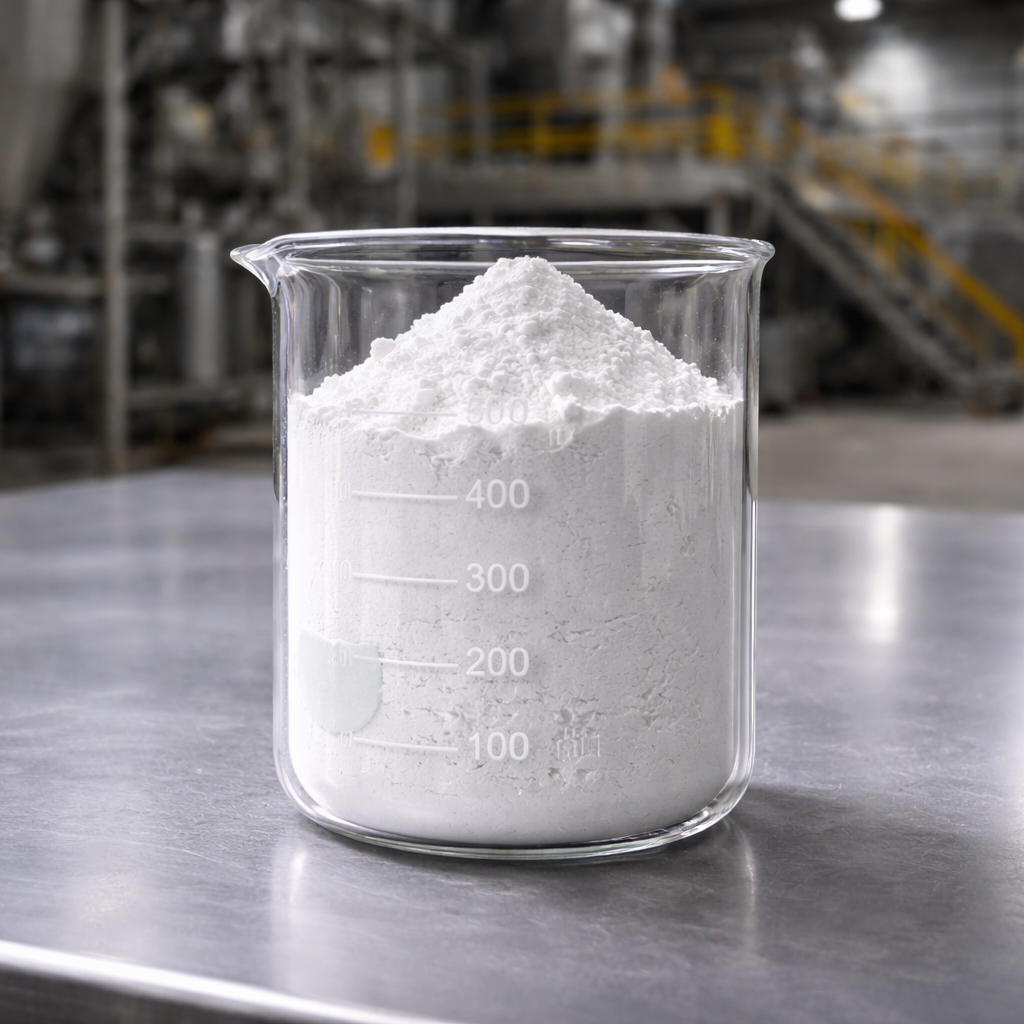
(May 28, 2026) As a widely used inorganic functional filler, the value of silica has long surpassed that of traditional rubber reinforcement. Against the backdrop of rapid iteration of new material technology and continuous upgrading of downstream industries, the industry's development focus has completely shifted to technology research and development, performance upgrades, and scenario adaptation. Major manufacturers are focusing on formula improvement, process innovation, and category segmentation, building competitiveness with technology as the core, and driving the entire industry to move away from the extensive development model and fully enter a new era of refined and specialized development.
Technology R&D capability has now become the core benchmark for dividing industry tiers. In the past, the domestic market mainly used the general precipitation method for silica black, with severe product homogenization and small performance indicator gaps, and market competition mainly focused on price. Today, cutting-edge technologies such as surface modification, nano-processing, and precise particle size control have become key for companies to break through development bottlenecks. Specialized models developed for different application scenarios have been successively launched, featuring differentiated performance products such as high dispersion, low oil absorption, superhydrophobicity, and high purity, precisely meeting the diverse downstream demands. The market space for general products, which originally had low technical barriers, is shrinking, and companies with independent R&D capabilities and mastery of core formulas firmly hold dominant positions in the market.
Products with different preparation processes have also found their own development positioning through technological upgrades, forming a complementary pattern. The precipitation process for silica continues to be refined and refined, improving dispersion performance through process optimization, deeply integrating into green tires and high-end rubber and plastic products, constantly optimizing product stability and weather resistance, and steadily consolidating its traditional foundation. Vapor-phase silica is making breakthroughs toward ultra-high purity and ultra-fine particle sizes, gradually breaking down technical barriers and accelerating domestic substitution in high-end fields such as electronic components, high-end sealing materials, pharmaceutical carriers, and cosmetics. The simultaneous advancement of both mainstream processes has made the silica product matrix increasingly complete, covering all levels of demand from basic industries to high-end cutting-edge industries.
Downstream application technology upgrades, in turn, force upstream white carbon black products to keep iterating. The rapid development of the new energy industry has set extremely high requirements for material safety, insulation, and resistance to extreme temperatures, forcing companies to develop white carbon black specifically for lithium batteries; The high-end coatings and ink industries pursue matte finishes, wear resistance, and yellowing resistance, driving continuous optimization of matte series of silica black formulations; In fields such as food, pharmaceuticals, and daily chemicals, the strictest standards are applied regarding product purity and limits of harmful substances. Linkage between upstream and downstream technologies and collaborative R&D has become the norm. Many manufacturers actively connect with downstream customers, participate in early-stage product R&D, and customize exclusive products according to end-user requirements. The supply-demand relationship has shifted from simple buy-and-sell cooperation to deeply bonded industrial partnerships.
At the same time, the implementation of intelligent production technology has also laid a solid foundation for the refined development of white carbon black. Traditional production lines rely on manual control of parameters, making it difficult to ensure product batch stability. Today, leading companies have successively completed intelligent transformation of production lines, relying on automated control systems to real-time control of key parameters such as reaction temperature, material ratio, and reaction time, greatly improving product consistency and significantly reducing defect rates. Intelligence not only improves production efficiency but also enables fine, customized small-batch production, enabling flexible responses to customers' diverse and personalized order needs.
Industry experts say that technology-driven development has become an irreversible development trend in the silica industry. The model of relying solely on capacity expansion and low-price competition will eventually be eliminated by the market. The core of future industry competition will focus on technological reserves, customized services, and product quality. For companies, continuously increasing R&D investment, keeping pace with downstream technology trends, and deepening focus on niche sectors is the key to gaining a foothold amid industry transformation.
Looking ahead, as the new materials industry continues to expand, the boundaries of white carbon applications will keep expanding. With the continuous empowerment of technological innovation, the domestic silica industry will steadily enhance its comprehensive strength, gradually transform from a major material producer to a technology powerhouse, and play an increasingly important role in the global new materials industry chain.
http://www.siliconeoil.net