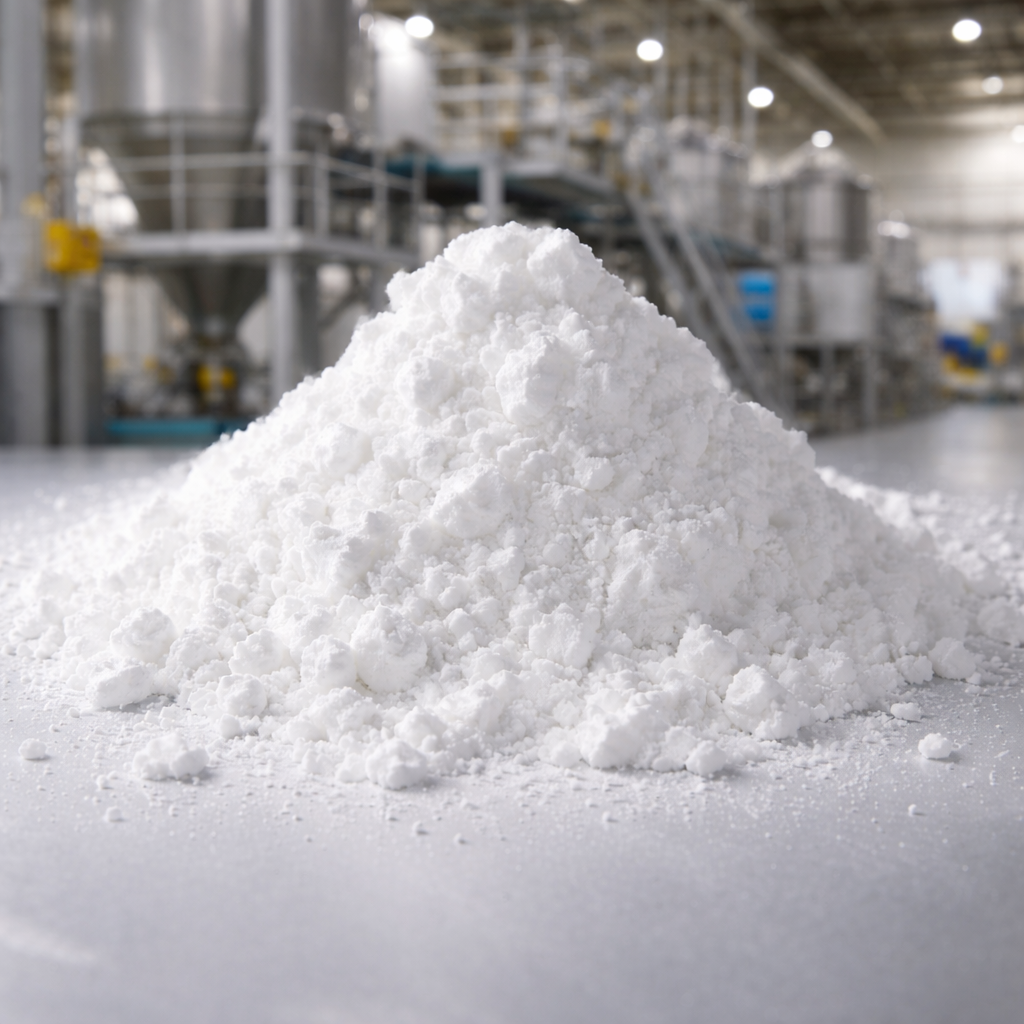
(May 23, 2026) As a key filler in the field of new chemical materials, silica is widely used in dozens of industries including rubber tires, high-end coatings, daily chemical and beauty, pharmaceuticals and food, agricultural additives, and electronic materials, thanks to its excellent properties of reinforcement, thickening, settling, and wear resistance. Entering the middle to latter half of this month, the domestic silica industry chain has been working together in coordination, with positive changes on the raw material side, production side, and application side. Not only are traditional mainstream markets operating steadily, but several emerging sub-sectors are showing strong growth potential, becoming new highlights in industry development.
From the perspective of upstream raw material supply, the market for core raw materials such as sodium silicate, sulfuric acid, and fumed silane has recently been ample, logistics and transportation efficiency has steadily improved, and regional barriers to raw material circulation are gradually being eliminated. Affected by stable energy prices, the overall production costs of silica producers have not fluctuated significantly, providing strong support for stable production and controlling product pricing. Based on feedback from manufacturers in multiple regions, the current mainstream raw material arrival cycle is normal, stockpiling volumes can meet medium- and long-term production needs, and there are currently no risks of shortages or price increases on the raw material side. Overall, the upstream fundamentals of the industry chain are positive.
In the manufacturing segment, major domestic silica production bases are operating at high capacity. After years of technological iteration and environmental upgrades, outdated production capacity in the industry has been continuously eliminated, market capacity structure has been further optimized, and large-scale, refined production has become mainstream. Currently, precipitation-based silica still dominates the market, with product categories continuously segmented, gradually extending from general reinforcement types to specialized models with low oil absorption, high dispersion, and transparent grades; Vapor-phase silica, thanks to its high-end performance, continues to increase its share of production capacity in high value-added fields. At present, the overall industry inventory structure is healthy, with leading companies scheduling orders orderly, small and medium-sized manufacturers scheduling production as needed, and overall production and sales coordination smooth, with no polarization such as inventory backlog or tight supply. At the same time, the ongoing implementation of normalized supervision of environmental protection and safety production has forced companies to optimize production processes and improve their treatment capacity for the three wastes, raising the overall level of green and standardized development in the industry to a new level.
The diverse demands of downstream application markets are the core driving force behind the steady upward movement of the silica industry. In traditional core sectors, the tire and rubber products industry is showing significant recovery momentum. Domestic tire companies maintain high operating rates, export orders increase simultaneously, and higher requirements are being placed on the reinforcement and aging resistance of silica. Orders for high-grade rubber-specific silica continue to rise. The coatings and ink industry is characterized by peak seasons, with both production and sales of architectural coatings, industrial coatings, and printing inks booming. As an anti-settling, matting, and wear-resistant filler, white carbon black is steadily increasing in market demand.
Notably, emerging application tracks are opening up new growth opportunities for white carbon black. Daily chemical care and personal care products are continuously upgraded, with demand for ultra-fine silica black rising in products such as clear toothpaste, high-end skincare, and care gels; In agriculture, large-scale production of agricultural products such as pesticide suspension agents and foliar fertilizers has driven an increase in the procurement of agricultural dispersed silica. In addition, high-end fields such as new energy, electronic seals, food additives, and medical excipients are increasingly demanding high-purity, low-impurity, and highly stable silica black, which is driving companies to increase R&D and production of high-end products, with the added value of industry products continuously rising.
Regarding future market trends, senior industry analysts say that the current supply-demand balance in the white carbon black industry is approaching, demand in traditional sectors is steadily rising, and growth in emerging sectors is considerable. In the short term, market prices will mainly operate smoothly, with slight differentiation among product specifications depending on application scenarios. In the long run, as downstream high-end manufacturing continues to develop, market demands for the quality, functionality, and environmental protection indicators of silica will keep rising. Technological R&D, product differentiation, and customized services will become core competitive strengths for enterprises. In the future, the domestic silica industry will gradually shift from scale expansion to quality upgrades. Under the trend of coordinated development across the entire industry chain, the overall market is expected to maintain long-term stable growth.