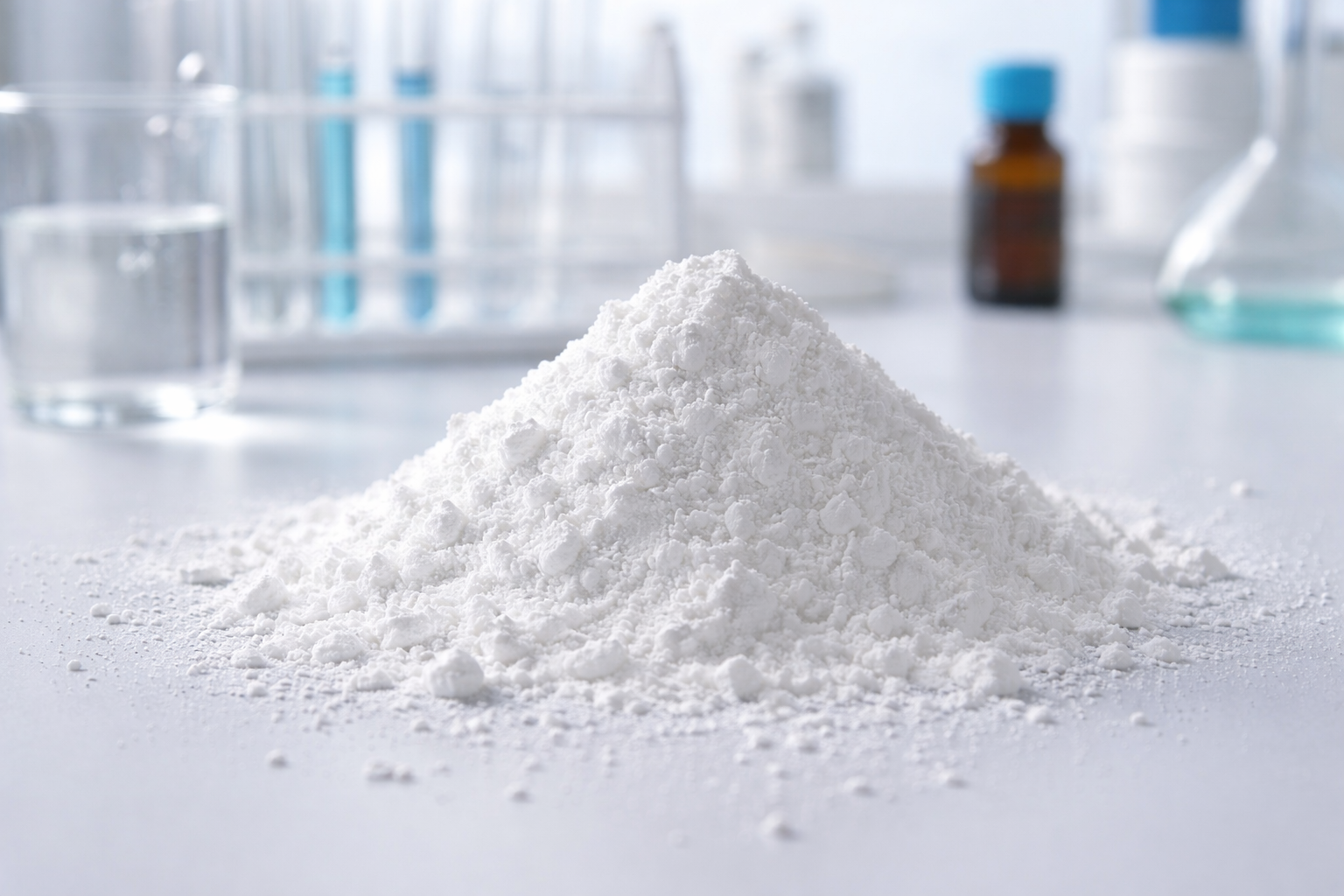
(May 20, 2026) In recent years, the domestic white carbon black industry has experienced a period of technological research and development. Core technologies such as gas phase methods, nano-modification, and surface functionalization have continuously made breakthroughs, breaking long-standing overseas technology monopolies, promoting the leap of domestic white carbon black from "qualified usable" to "high-end and high-quality" products, accelerating the domestic substitution process and injecting strong momentum into high-quality industry development.
For a long time, the core technology of high-end silica has been controlled by European, American, and Japanese companies, while domestic companies have mostly focused on mid- to low-end precipitation products. They have faced technical bottlenecks in fields such as vapor-phase silica and highly dispersed modified products, with core processes and key equipment dependent on imports, resulting in the high-end market long dominated by overseas brands. Since 2026, domestic research institutions and enterprises have intensified the integration of industry, academia, and research, focusing on tackling technological pain points and achieving breakthrough progress in multiple key technology fields.
In the field of fumed silica, domestic companies have successfully overcome core challenges such as optimizing silicon tetrachloride hydrolysis processes and precise particle size control. Their high-purity fumed silica products have reached internationally advanced levels in specific surface area, dispersibility, and reinforcement performance, breaking the monopoly of overseas companies in high-end rubber, electronic packaging, aerospace, and other fields. Product prices are more than 30% lower than imported counterparts, greatly enhancing market competitiveness.
The iterative upgrade of surface modification technology has become a key innovation focus in the industry. To meet the needs of different downstream scenarios, the company has developed customized modified silica such as hydrophobic, oleophilic, and anti-static types, solving traditional product issues such as poor dispersion and insufficient compatibility with substrates, and is widely used in high-end fields such as high-end coatings, food additives, pharmaceutical excipients, and 3C electronic packaging. Among them, hydrophobic modified silica used as a photovoltaic adhesive has significantly improved weather resistance and sealing properties, helping the photovoltaic industry reduce costs and increase efficiency.
R&D investment continues to increase, supporting technological breakthroughs. In the first quarter of 2026, R&D investment in the domestic white carbon black industry will increase by 27.3% year-on-year, with leading companies accounting for over 5% of R&D expenses. Provincial and national R&D centers are being established to focus on new processes, green technologies, and high-end product development. At the same time, the industry is accelerating talent cultivation and technology introduction, forming a complete innovation chain of "R&D-testing-industrialization" to promote rapid transformation of technological achievements.
Technological breakthroughs have driven product structure optimization, with the proportion of domestic white carbon black continuing to rise. Data shows that from January to April 2026, domestic high-end modified silica production increased by 41.2% year-on-year, with its share of total silica rising to 28.6%, an increase of 8.3 percentage points compared to the same period last year. Domestic high-end silica not only meets the high-end demand of domestic downstream customers but is also exported in bulk to markets such as Europe, Japan, and South Korea, achieving a two-way breakthrough in both "technology export" and "product export."
Industry experts say that technological innovation has become the core engine for the high-quality development of the white carbon black industry. With the continuous iteration of new modification technologies and low-carbon production processes, domestic white carbon black will further break through overseas technological barriers, achieve full replacement in the high-end market, and promote China's transformation from a major white carbon black producer to a strong production country.
http://www.siliconeoil.net