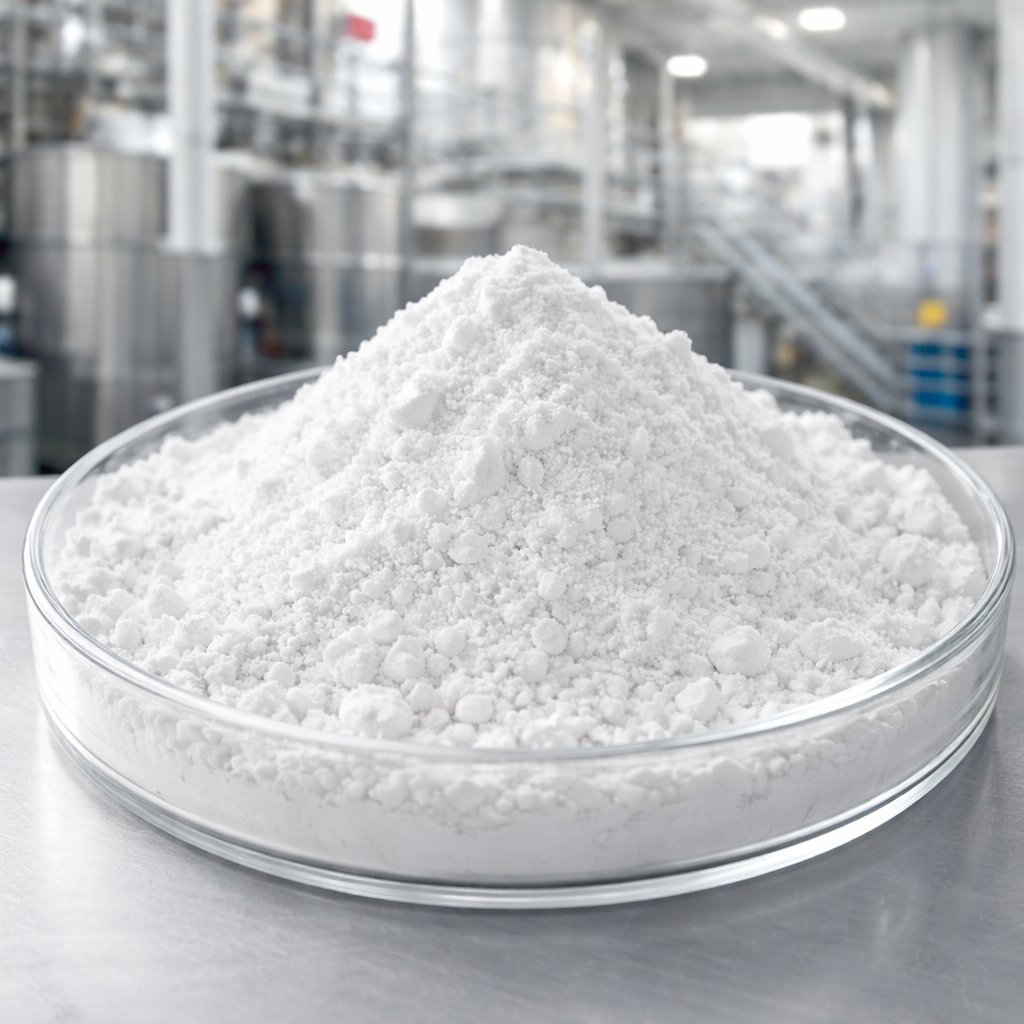
(May 14, 2026) Recently, the domestic silica industry has ushered in multiple changes in supply and demand structure, product pattern, and market direction, with stable demand in the field of traditional tires and rubber, and demand for emerging tracks such as new energy, fine chemicals, and high-end daily chemicals continuing to increase. Coupled with the stabilization of upstream raw material costs, the deepening of green and low-carbon policies, and the steady growth of overseas orders, the industry officially bid farewell to the era of low-end production capacity involution and accelerated its transformation to high-end, functional, green and globalization.
From the perspective of market prices, as of May 13, the data of the business agency showed that the benchmark price of domestic silica was stable at 6066.67 yuan/ton, with a cumulative increase of 3.70% in the past 90 days, and the overall was in the middle and high range of the year; The mainstream quotation of rubber-grade precipitation silica is 5800-6100 yuan/ton, and the price of food-grade silica is about 6500 yuan/ton, and the high-end products of the fumed phase method still maintain a high premium, with a price range of 15000-28000 yuan/ton, and the price difference between different grades of products continues to widen.
The downstream demand side presents a differentiated pattern of traditional stable volume and emerging outbreaks. In the traditional field, tire and rubber reinforcement are still the largest consumption scenarios of silica, and with the increase in the penetration rate of green tires, the demand for highly dispersed silica has grown steadily. Emerging fields such as new energy vehicle lithium battery separator coatings, photovoltaic sealants, agricultural silicone additives, 3C electronic materials, and high-end silicone rubber have become the core driving force for the industry's increment, among which the annual demand growth rate of ultra-fine and high-purity silica for lithium batteries exceeds 25%, becoming the fastest growing segment. At the same time, the demand for food anti-caking agents, daily chemical thickening, pharmaceutical carriers and other fields continues to be released, further broadening the application boundaries of silica.
On the supply side, the industry reshuffle continues to deepen. Affected by the tightening of environmental protection policies and the promotion of the dual carbon goal, the domestic low-end and high-energy-consuming silica production capacity has been accelerated, and the concentration effect of leading enterprises has been highlighted; The low-carbon production capacity of agricultural waste such as rice husk and straw as raw materials has expanded rapidly, and the carbon asset income of 150-200 yuan per ton of product can be achieved, and the export to the EU can avoid carbon tariff costs, and the export premium of high-end low-carbon products has reached 20%-35%, greatly enhancing the international competitiveness of domestic silica.
The foreign trade market has become a new growth pole in the industry. Recently, overseas orders have continued to increase, with strong demand in Southeast Asia, the Middle East and South America, and domestic high-end silica gradually breaking the import monopoly, and the export structure continues to be optimized. Compared with the international market, leading companies in Europe and the United States have gradually reduced traditional production capacity and optimized asset layout, creating a window period for domestic silica companies to seize global market share.
Industry analysts pointed out that in the future, the silica industry will completely get rid of the extensive model of "relying on scale involution", and high-end functionalization, green and low-carbon, and export globalization will become the three core development directions. With the continuous expansion of the downstream new materials and new energy industries, and the acceleration of the process of domestic substitution, the domestic silica industry will usher in a golden period of high-quality development, and the overall profitability of the industry is expected to be steadily repaired.
http://www.siliconeoil.net