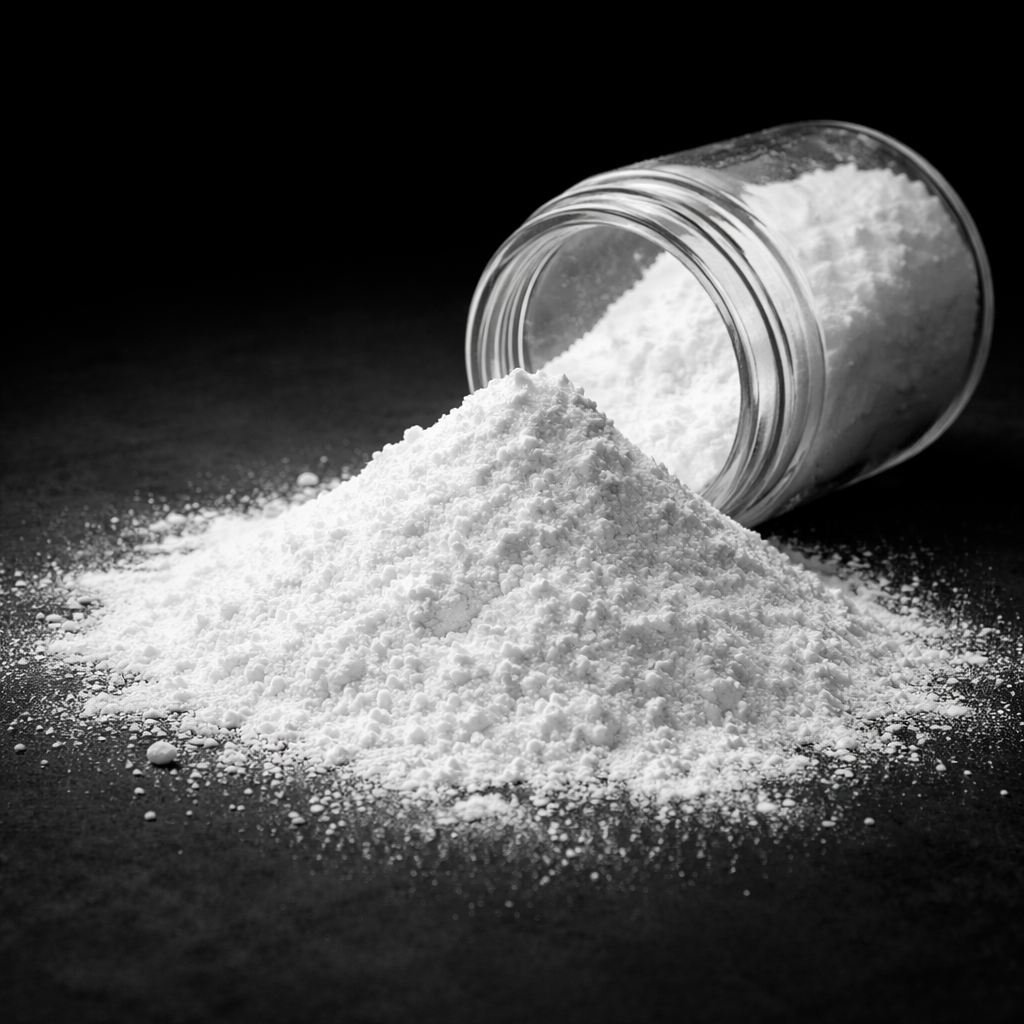
(April 23, 2026) Amidst the increasingly fierce competition in the global new materials industry and the growing consensus on green and low-carbon development, China's white carbon (hydrated silica) industry is facing unprecedented opportunities for growth and transformation. Since 2026, with continuous breakthroughs in core production technologies, optimized industrial structures, and expanded downstream applications, the domestic white carbon industry has gradually emerged from the predicament of low-end, homogenized competition and is accelerating its advancement towards higher-end, more refined, lower-carbon, and diversified directions. The overall competitiveness of the industry and its global influence have significantly increased. Today, we will provide a comprehensive analysis of the current development status and future trends of China's white carbon industry, based on the latest industry data, technological advancements, and market developments.
As an important inorganic silicon material, white carbon is widely used in various fields such as tire rubber, silicone rubber, coatings, adhesives, food, pharmaceuticals, electronics, and new energy due to its excellent properties including reinforcement, thickening, anti-aging effects, and insulation. It is a key raw material indispensable to modern industrial systems. For a long time, China's white carbon industry has faced the issue of being "large but not strong"—with excess capacity for low-end products produced by sedimentation methods and severe homogenized competition. High-end products such as gas-phase synthesized white carbon, highly dispersed white carbon, and specialized types of white carbon rely on imports. There is a gap between China's core production technologies and international advanced levels. Additionally, traditional production processes are energy-intensive and pose significant environmental challenges, which have hindered the high-quality development of the industry.
Since 2026, there has been a frequent emergence of technological innovation achievements in the domestic silica industry, with breakthroughs in core technologies becoming the driving force behind industrial upgrading. In the field of fumed silica production, leading domestic companies have successfully overcome the integrated core technologies of "efficient combustion - gas-phase hydrolysis - precise modification" after years of research and development. This has addressed issues such as high energy consumption, low product purity, and poor dispersibility in traditional fumed silica production methods, enabling the large-scale and domestically produced supply of high-quality fumed silica. According to the latest data from the China Inorganic Silicon Materials Industry Association, as of April 2026, China's fumed silica production capacity had exceeded 150,000 tons per year, with the domestication rate rising to over 65%, an increase of 12 percentage points compared to the same period in 2025. This has completely shattered the monopoly held by European, American, and Japanese companies in the high-end fumed silica market.
In the field of precipitated silica production, the promotion and application of new green and low-carbon processes have been particularly effective. The traditional precipitated silica production method uses the sulfuric acid-soda ash process, which is characterized by high water consumption, large amounts of wastewater discharge, and high energy consumption. However, new processes developed by domestic companies, such as carbon dioxide acidification and waste acid recycling methods, have significantly reduced wastewater and gas emissions during production while also facilitating the recycling of resources, effectively lowering production costs for manufacturers.Among these, the new carbon dioxide acidification process can increase the utilization rate of carbon dioxide during production to over 80%, reduce water consumption per ton of product by 30% compared to traditional processes, and lower overall energy consumption by 25%. This process has already been implemented on a large scale in multiple enterprises in major production areas such as Shandong, Jiangxi, and Jiangsu, contributing to the transformation of the precipitated silica industry towards green and low-carbon practices.
In addition to advancements in production technology, the optimization of product structure has also become a significant development feature for China's silica industry in 2026. As downstream industries continue to raise their requirements for product performance, domestic companies are increasing their investment in the research and development as well as production of high-end specialized silicas. The range of products has expanded to include silica for high-dispersity rubber, silica specifically for silicone rubber, matting silica for coatings, food-grade silica, pharmaceutical-grade silica, and electronic-grade silica. In particular, silica for high-dispersity rubber, with its excellent reinforcement properties, significantly enhances tire wear resistance, aging resistance, and fuel efficiency, aligning with the global trend towards "greening" and "lightweighting" in the tire industry. It has become a growth hotspot within China's silica industry, with production increasing by 18.7% in the first quarter of 2026 and market share rising to 32%.
In terms of market operations, since 2026, the domestic silica gel market has generally shown a trend of "stabilization at high levels and structural differentiation." As of April 23, the mainstream benchmark price for rubber-grade silica gel produced by the precipitation method nationwide has remained at 6066.67 yuan per ton, while the transaction prices for industrial-grade products in major production areas such as Shandong and Fujian have ranged from 6300 to 7000 yuan per ton. The price for high-end silica gel specifically used in silicone rubber is 6800 to 8000 yuan per ton, and the price for high-end silica gel produced by the gas-phase method remains strong, ranging from 16000 to 32000 yuan per ton. Due to insufficient production capacity and tight market supply, the lead time for processing orders has generally increased to 15-20 days.
The core factors supporting the high prices are twofold: First, the cost of upstream raw materials has remained high. The prices of key raw materials such as sulfuric acid, soda ash, and coal have risen significantly since the beginning of the year, with sulfuric acid increasing by 22.3% year-on-year and soda ash by 15.8%, significantly boosting the production costs of silica gel manufacturers. Many leading domestic companies completed a new round of price adjustments in March, with increases of up to 500 yuan per ton. These price increases have now fully taken effect, and the market is focusing on absorbing the previous price gains and stabilizing shipments. Second, downstream demand is steadily recovering. The operating rates in traditional application sectors such as tire rubber, silicone rubber, and coatings have continued to rise, leading to steady demand for these products. At the same time, there is a rapid growth in demand for high-end silica gel in emerging fields such as new energy, electronics, and pharmaceuticals, which further supports market prices.
The export market has also performed exceptionally well, becoming a new driving force for growth in the domestic silica industry. In the first quarter of 2026, China's silica exports reached 182,000 tons, an increase of 20.5% year-on-year, with export earnings amounting to 230 million US dollars, a year-on-year increase of 28.7%. Among these, the export volume of high-end silica products particularly increased significantly, with high-dispersity silica and food-grade silica seeing year-on-year growth of 35.2% and 29.8% respectively. Southeast Asia, Europe, and the Middle East have become the core markets for this growth. Against the backdrop of a restructured global silicon-based raw material supply chain, due to capacity fluctuations and unstable raw material supplies in some overseas countries, China's silica industry has continued to expand its international market share by leveraging its complete industrial chain advantages, stable capacity supply, and continuously improving product quality. As a result, the desire of overseas downstream enterprises to purchase from China has also continued to strengthen.
Along with the industry's development, policy guidance has provided strong support for the high-quality development of the silica industry. In recent years, the state has introduced various policies such as the "14th Five-Year Plan for Raw Materials Industry Development" and the "Guiding Opinions on the Green Development of Inorganic Silicon Materials Industry," which explicitly call for optimizing the capacity structure of the silica industry, phasing out inefficient and low-output production methods, and encouraging enterprises to increase investment in technological innovation to develop higher-end, low-carbon, and refined products.Local governments have also introduced a series of supporting policies to provide financial subsidies and policy support for the technological transformation of white carbon black enterprises and the construction of new projects, thereby promoting the clustered development of the industry. Currently, multiple white carbon black industry clusters have formed in regions such as Weifang in Shandong, Jiujiang in Jiangxi, and Zhenjiang in Jiangsu, with a continuous increase in industrial concentration.
Industry experts indicate that 2026 is a crucial year for the high-quality development of China's white carbon black industry, with technological breakthroughs, product upgrades, and green transformation becoming the core drivers of industry growth. In the short term, the domestic white carbon black market is expected to maintain a pattern of stable prices for general products and high demand for premium products. As the cost of upstream raw materials stabilizes, price fluctuations are expected to diminish. In the long run, with the acceleration of the localization of premium products, the expansion of new application scenarios, and the widespread adoption of green and low-carbon manufacturing processes, China's white carbon black industry will move away from low-end homogeneous competition and achieve a transition from a "country with large production capacity" to a "strong industrial nation."
In the future, domestic white carbon black enterprises need to continue to invest heavily in technological innovation, focus on the development of high-end products and process optimization to enhance product value and core competitiveness. They should also strengthen collaboration within the industrial chain to promote coordinated development between upstream and downstream sectors and improve the overall industrial ecosystem. Additionally, they need to actively expand into overseas markets, deepen international cooperation, increase the global impact of Chinese white carbon black products, and drive the industry towards higher quality and more sustainable growth.